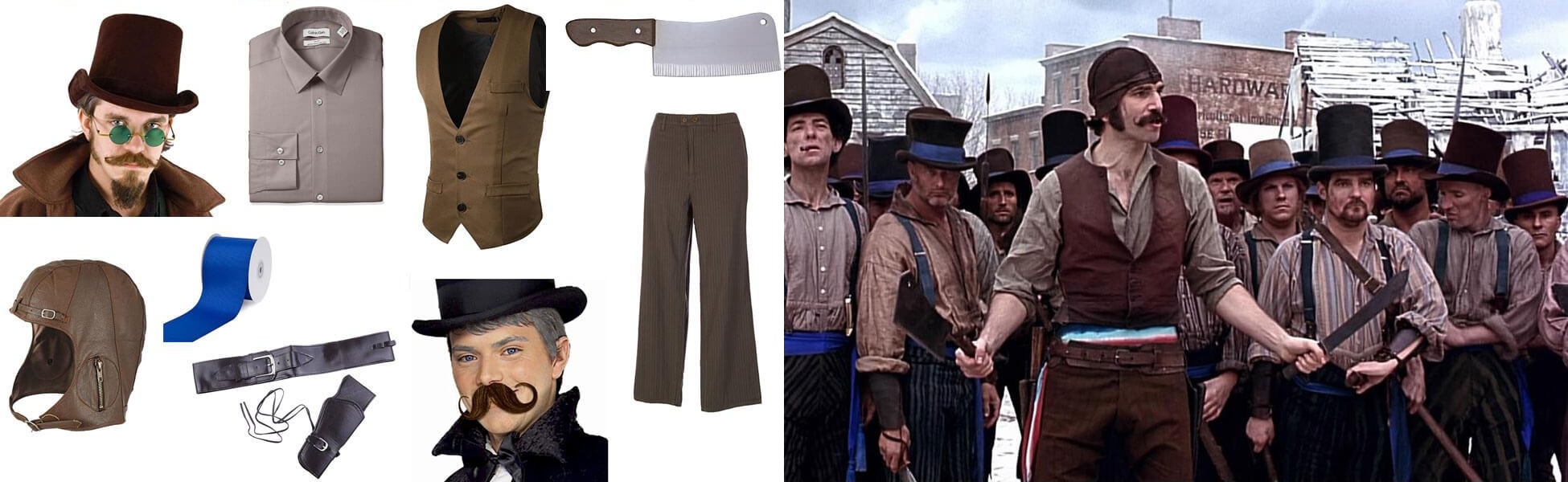
Bill Cutting’s look centers on exaggerated nineteenth-century working-class tailoring mixed with butcher’s trade gear. The silhouette is immediately defined by high-waisted trousers, heavy layering, a towering hat, and his ever-present steel blades.
Rather than a clean historical reenactment, the garments lean heavily into grit, theatrical proportions, and patriotic motifs. Getting the pieces right means balancing rough, textured fabrics with the sharp visual cues that give the character his menacing presence.
The Headwear and Hat Band
Headwear defines Bill’s silhouette before anything else. For his standard street appearance, a tall coachman top hat serves as the centerpiece. A hat with a slight taper and a flared crown matches the exaggerated period look best. Wrapping a wide royal blue ribbon around the base of the crown recreates the patriotic striping seen throughout his wardrobe. Because top hat crowns often taper outward toward the top, secure the ribbon with a few small fabric pins or dots of fabric glue so it doesn’t shift during wear.
If you prefer his opening battle appearance from Paradise Square, a replica vintage brown leather aviator helmet offers an alternative foundation for his strapped combat headgear. The ear flaps and chin buckle provide the rugged, armored look he wears into the gang clash.
Facial Hair and Scars
Bill’s sweeping handlebar mustache is non-negotiable. A brown novelty handlebar mustache gives you the proper width and curled tips. Trim the backing slightly if the mesh edge extends beyond the hair, and use spirit gum along the upper lip so sweat won’t loosen it during long convention days. A quick touch of mustache wax or hairspray keeps the curled ends pointed sharply outward.
To push the likeness further, pair the mustache with a cloudy white contact lens in the left eye, replicating his distinctive glass eye etched with an American eagle. Adding subtle stippling makeup or light scarring around the left cheekbone and eye socket emphasizes his brutal fighting history.
Shirt, Vest, and Trousers
Underneath, the layering relies on textured Victorian workwear. A taupe herringbone dress shirt works well when worn unbuttoned at the collar with the sleeves rolled up past the wrists to the mid-forearm, reflecting his butcher-shop routine. Choosing a shirt with a collar band or traditional turn-down collar works much better than a stiff modern spread collar.
Over the shirt, layer a brown waistcoat vest. Wearing it with the bottom buttons undone creates a lived-in, unkempt shape that fits the gritty Five Points atmosphere. If you have a vintage pocket watch chain, draping it across the vest pockets adds an extra touch of period authenticity.
For the lower half, dark brown pinstripe cotton pants provide the correct period pattern. These sit higher on the natural waist compared to modern low-rise trousers. Tucking the pant legs into heavy brown leather work boots or knee-high riding boots anchors the bottom of the outfit and mirrors the utilitarian fashion of mid-nineteenth-century laborers.
Tool Belt and Cleaver Prop
The butchering equipment anchors the entire character. A sturdy brown belt and holster lets you carry your prop securely at the hip. Adjust the holster strap so the handle sits easily within reach without flopping against your leg while walking through convention crowds.
For convention safety, pair the holster with a realistic kitchen cleaver prop made of high-density foam or molded plastic rather than real metal. Most convention security desks prohibit live steel or sharpened implements. Lightly distressing the blade with acrylic washes of dark gray, black, and silver paint will dull down fresh plastic shine and give it the worn surface of an everyday slaughterhouse tool. You can also zip-tie or peace-bond the handle to the holster if your venue requires weapons to remain holstered.
Weathering and Finishing Details
Clean clothing works against this costume. The Five Points was notoriously muddy and soot-stained, so rubbing diluted brown acrylics, dark gray pastels, or costume weathering powder into the trouser cuffs, vest edges, and shirt collar makes the garments feel authentic to the setting. Focus heavier grime around the knees, cuffs, and elbows where real wear accumulates.
Adding a butcher’s apron or a simple striped neckerchief can flesh out the outfit even further depending on which scene you want to represent. With the layers assembled, the silhouette conveys Bill’s imposing authority while remaining comfortable enough to wear across a full day of events.