
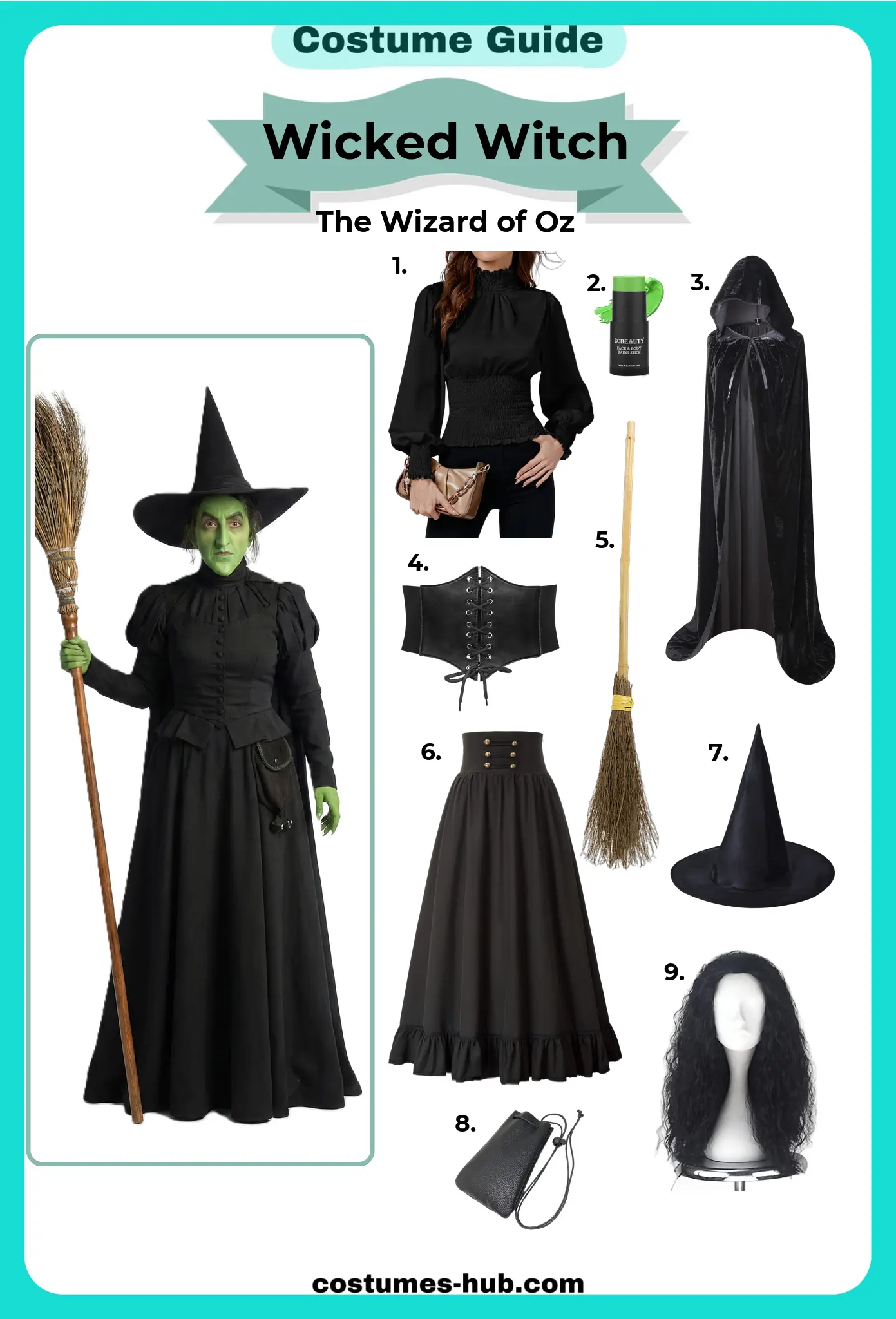
What You’ll Need

Black Frill Neck Puff Long Sleeve Top

Light Green Face Body Paint

Black Long Hooded Cloak
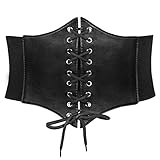
Waist Lace-up Corset Belt

Witch Broom
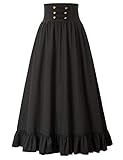
Vintage High Waist Long Skirt

Witch Hat

Drawstring Pouch

Long Curly Dirty Witch Wig
Building the Silhouette First
Start with the overall shape before worrying about any individual piece. The witch’s look depends on a narrow waist exploding into a floor-length skirt, with the hat and cape extending the vertical line even further. A slim or straight-cut dress will undermine the entire costume no matter how good the other pieces are.
A black Victorian-style gown with long sleeves and a high collar gives you the right base. Gothic or Renaissance dress patterns work well if you’re sewing, and costume shops carry acceptable ready-made versions. The skirt needs real volume—multiple layers of fabric or a petticoat underneath—so it moves heavily when you walk rather than swishing lightly.
The corset is the piece worth investing in. A black lace-up corset worn over the dress creates that severe, pinched middle that makes the witch imposing instead of shapeless. Back-lacing is preferable because you can adjust the fit yourself throughout the day. The contrast between that narrow waist and the voluminous skirt is what sells the entire look.
The cape should be long, hooded, and made from something heavy. Velvet or a thick poly-blend falls past the knees and drapes with weight; a flimsy Halloween cape floats and flutters, which is wrong. The hood needs to be genuinely large enough to cover your head and cast your face into shadow when you want it to. Test the cape by turning quickly—the fabric should sweep rather than flutter.
For the hat, proportions matter more than anything else. Halloween stores stock these everywhere, but cheap versions often have a stubby cone that looks like a party hat. The cone should be roughly the length of your forearm, and the brim wide enough to shadow your face when you tilt your head down. Secure it with bobby pins pushed through the brim into your hair or wig, especially if you’ll be moving around. If you can’t find one with the right proportions, a plain black witch hat can be reshaped by steaming the cone and gently stretching it.
A simple straw broom with a long handle works fine. Wrapping the handle with black ribbon or leather cord and tying dark feathers or small bones to the bristles with twine makes it look intentional rather than borrowed from a garage. Ten minutes of work turns an ordinary prop into something that belongs with the costume.
Green skin is what transforms the outfit into the character. Cream-based or alcohol-activated body paint in a light green shade applies more evenly and lasts longer than cheap Halloween face paint. Use a damp sponge and build up thin layers to full coverage. Paint your face, ears, neck, and hands, blending down past your jawline into your neck and chest so there’s no visible line. Seal everything with translucent setting powder and a setting spray. Dark green or black eyeshadow can contour your cheekbones, nose, and brow bone for a harsher, more angular face.
The wig should be long, black, and deliberately messy—windblown hair with wild curls framing the face. Loose curls or waves work better than sleek straight hair. Backcomb it and spray with hairspray to create that frazzled texture. If the natural parting looks too neat, pull strands forward around your face and let them fall across your forehead.
Long black pointed nails—press-ons or painted—and black boots with a slight heel finish the look. The long skirt covers most of the boot anyway, so comfort matters more than exactness here.
One practical concern: the green paint will transfer onto your collar if you’re not careful. Let it dry completely before dressing, and consider a thin black scarf or collar cover you can wash separately. If you’re wearing this for several hours, bring the setting powder for touch-ups around your mouth and neck.
Weathering the costume adds a lot. The witch’s clothes look decades old. Lightly sand the hems of the skirt and cape, drag them on the ground a few times, and use gray or brown acrylic paint diluted with water to create dusty streaks along the bottom edges. It’s a small effort that keeps the costume from looking like it just came off a rack.