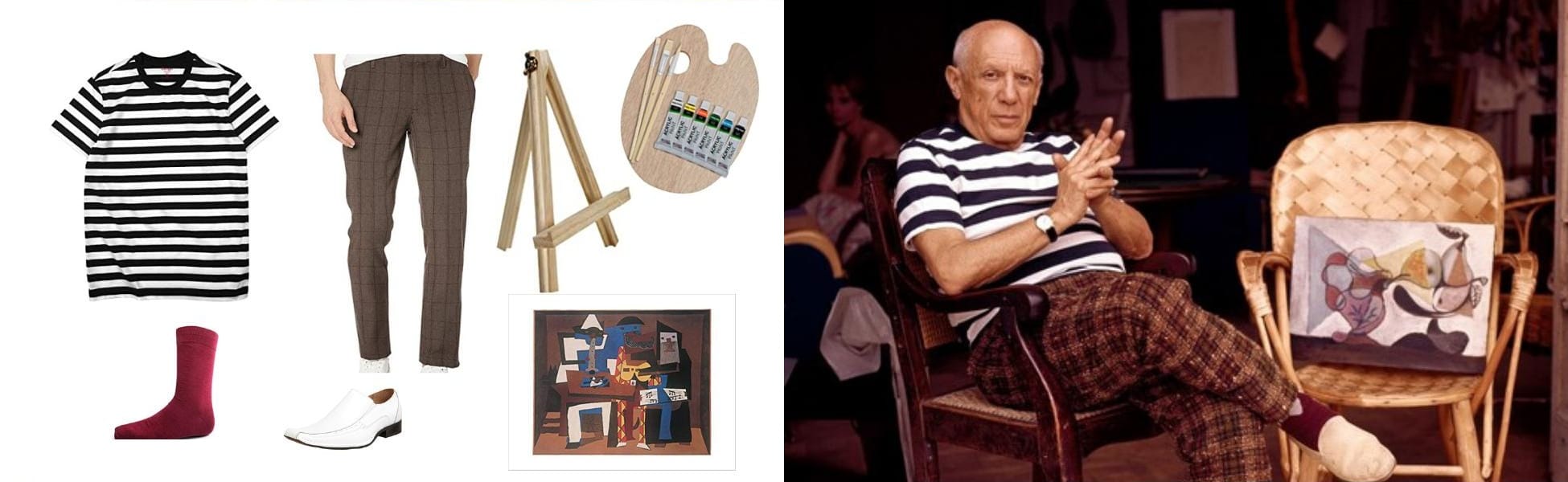



Pablo Picasso’s studio style is defined by a bold, graphic simplicity that centers on horizontal stripes and relaxed Mediterranean tailoring. Most people instantly connect him with the mid-century photos taken at his villa in the south of France, where he worked in comfortable, everyday garments rather than formal artist smocks.
Recreating this outfit comes down to balancing high-contrast patterns with casual, work-worn comfort. Because the clothing relies entirely on real-world garments, the distinction lies in the cut of the stripes, the relaxed drape of the trousers, and a few practical studio props that immediately contextualize the look.
The Striped Shirt
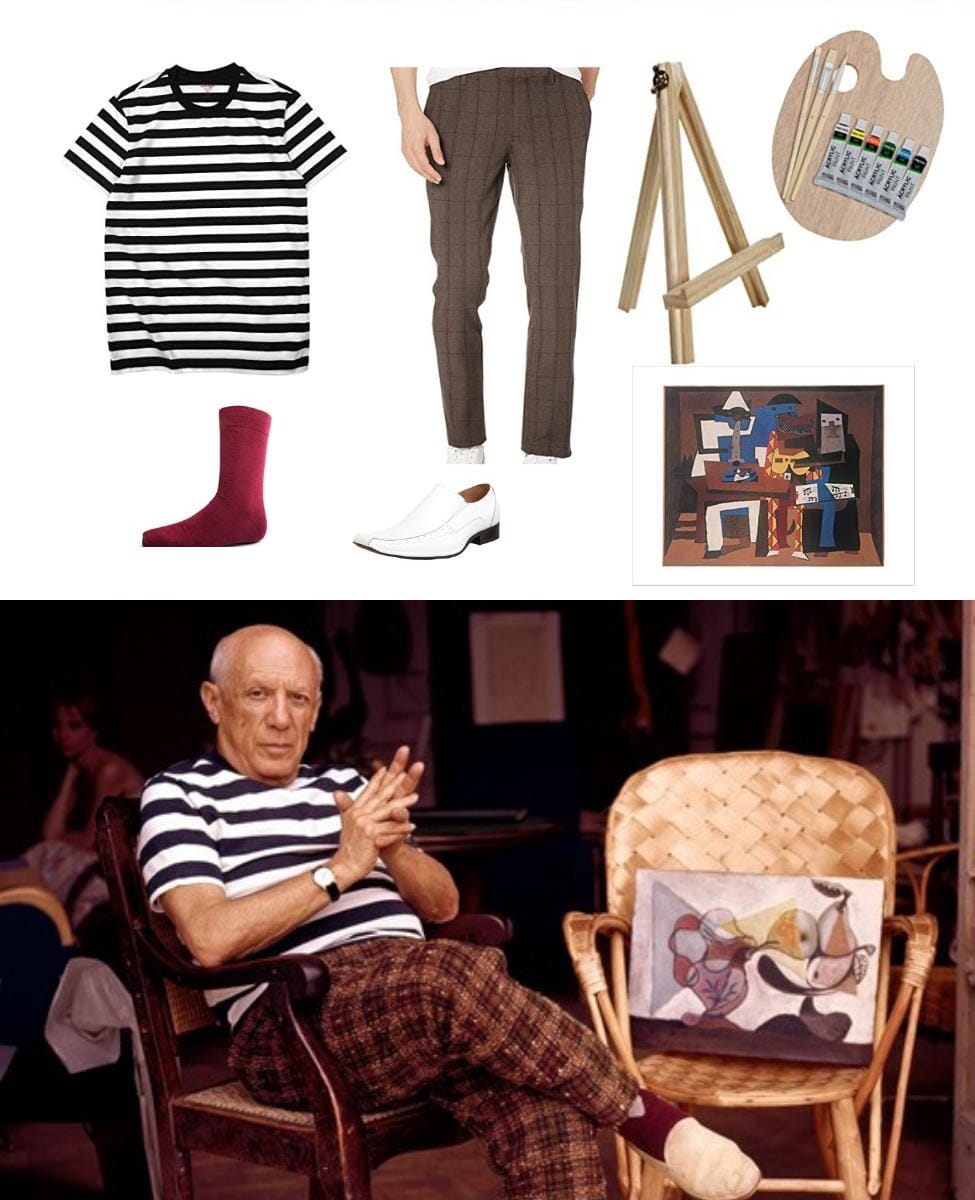
The centerpiece is a classic Breton marinière—a black and white striped t-shirt or long-sleeve crewneck. Traditional naval shirts feature a wide boatneck collar with solid white space across the chest and shoulders, though standard crewnecks with even horizontal stripes throughout work just as well for an informal recreation. Aim for medium-width horizontal banding rather than narrow pinstripes. A relaxed cotton weave matches the casual drape seen in vintage studio photographs, and keeping the shirt untucked or loosely half-tucked fits Picasso’s easygoing working routine.
Picasso wore both short-sleeve tees in warmer months and heavier long-sleeve fishermen jumpers in winter. If your shirt sleeves run past your wrists, rolling them up two turns toward the forearms looks natural and keeps your hands free if you handle props. A standard crewneck collar holds its shape better over a long day than an open boatneck, which tends to slip sideways if the fabric is lightweight.
Trousers, Socks, and Loafers
Picasso frequently paired his Breton tops with patterned trousers, creating an intentional clash between horizontal stripes and checked fabric. A pair of loose, straight-leg plaid pants in muted gray, navy, or brown tones breaks up the monochrome upper body. The fit should sit comfortably at the waist without tapering too tightly toward the ankles, maintaining a classic mid-century profile.
Down at the hem, roll or cuff the trouser legs slightly to expose a splash of color. Deep burgundy socks provide a subtle, deliberate contrast between the patterned trousers and light footwear. Cotton crew-length socks stay up reliably throughout a long day of walking.
For shoes, slip into simple white loafers or canvas slip-ons. Picasso spent long hours on his feet in his studio, so unembellished white leather or canvas slip-ons fit the coastal European setting. If you choose loafers with smooth soles, adding adhesive rubber grip pads to the bottoms prevents slipping on polished indoor floors. You can leave the loafers clean or lightly scuff the toes with charcoal or paint smudges if you want to suggest active studio work.
Studio Props and Artwork
Carrying art supplies anchors the character and gives you something natural to hold. A lightweight wooden portable easel can be carried collapsed under one arm or set up if you have a stationary display. Fastening a simple nylon shoulder strap to the easel legs lets you carry it hands-free when you want to browse without setting your gear on the floor.
Pair the easel with an artist’s paint set containing basic palette knives, wooden mixing palettes, and tubes of oil or acrylic paint. Squeeze small dollops of fast-drying acrylic paint onto a disposable paper palette or raw wooden board a day or two in advance. Letting the paint cure completely before packing prevents accidental pigment transfer onto your clothes or anyone around you.
For an unmistakable reference to his actual work, keep a rolled canvas or a framed Picasso art print nestled under your arm or resting on the easel. A print of a Cubist portrait or a minimalist line drawing like his dove sketches communicates his artistic identity instantly. If you are moving through a crowded venue, sliding an art print into an easel ledge gives you a compact, self-contained prop setup that requires minimal management throughout the day.