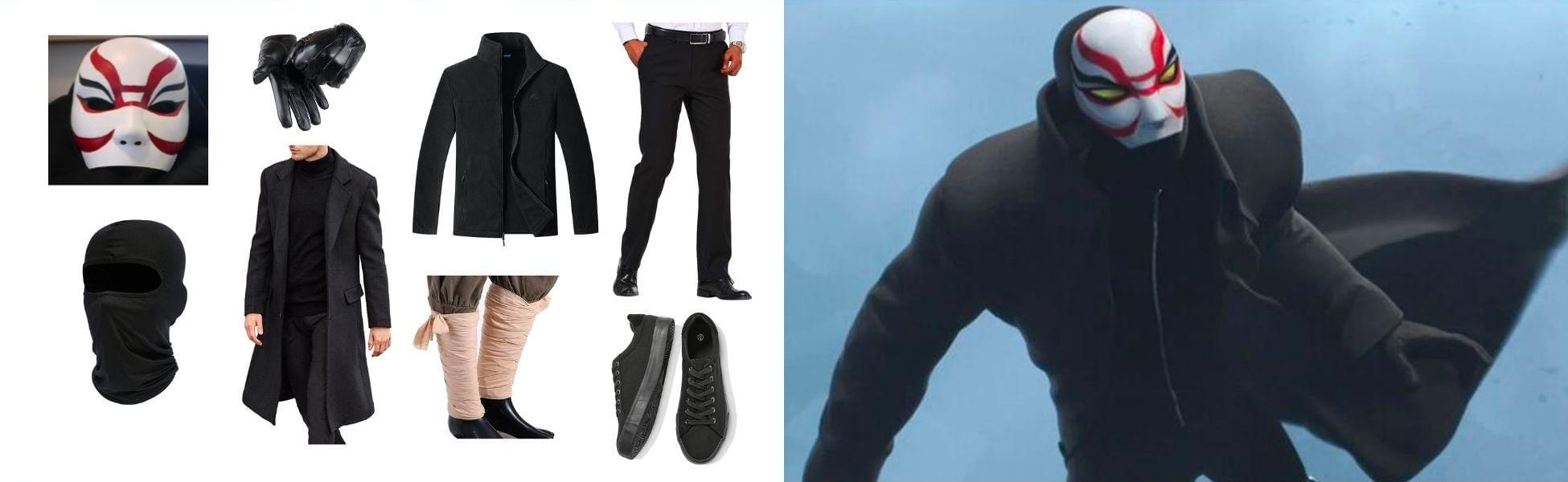
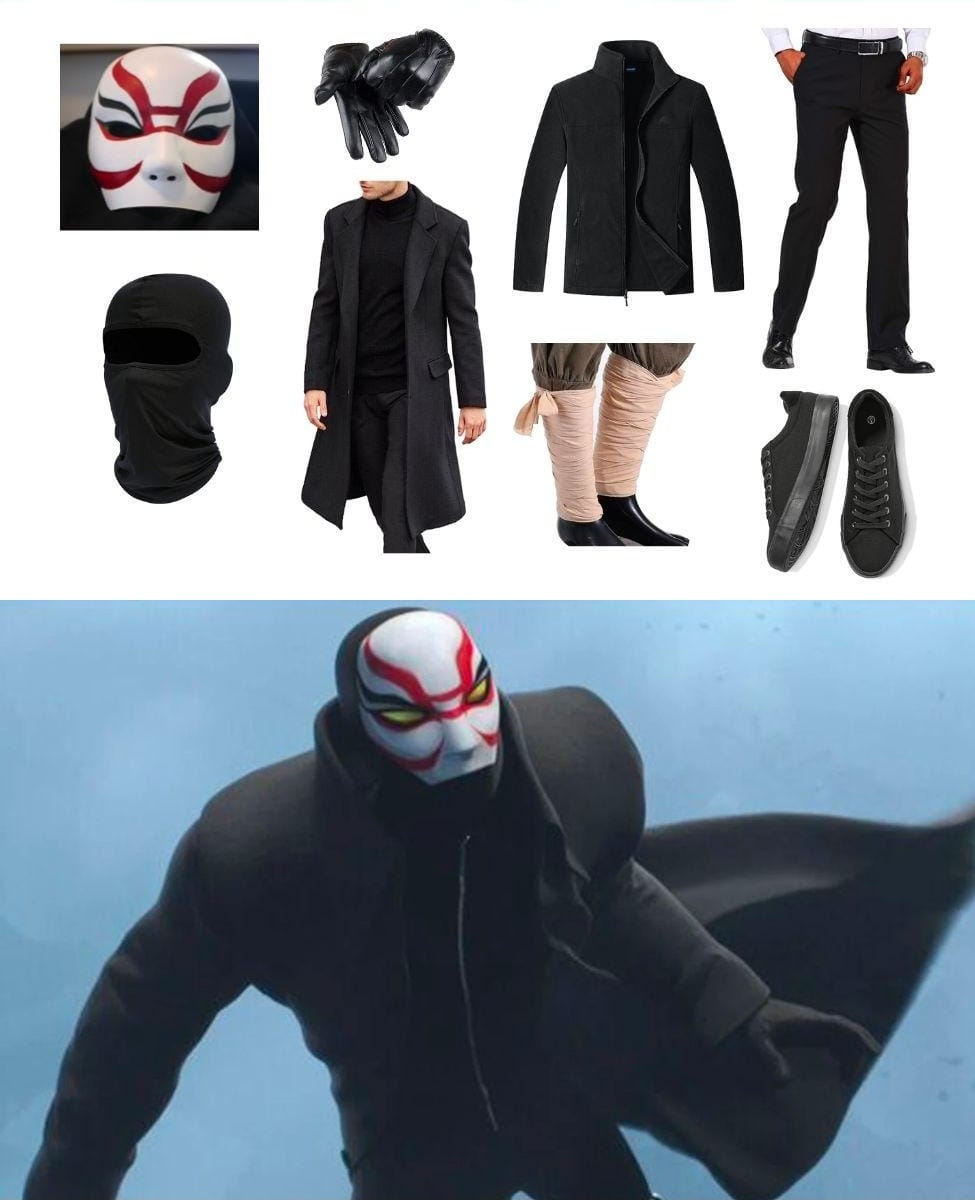





Yokai presents a striking silhouette defined by an all-black layered outfit contrasted against a pale Kabuki mask. Because the garments underneath are grounded in practical streetwear rather than complex sci-fi armor, assembling the outfit relies on getting the drape, volume, and head coverage right.
The mask serves as the sole focal point, while the rest of the costume functions as a shadow. Every visible inch of skin needs to be concealed so the white mask and sweeping black coat dominate the visual space.
The Mask and Blackout Hood
The white Japanese theater mask with stylized red markings carries the character’s identity. If you pick up a pre-made Yokai Mask, verify that it fits comfortably against the contours of your face without pressing painfully against the bridge of your nose. Vision through decorative eye slits can be limited, so testing your peripheral awareness before stepping into a crowded convention hall prevents accidental collisions. If the interior lacks padding, adding small foam pads at the forehead and cheekbones improves comfort during extended wear.
Underneath the mask, absolute head concealment is necessary. A thin, breathable Black Balaclava ensures that no hair, ears, or neck skin show through the mask’s eye openings or edges. Tucking the balaclava’s neck gaiter deeply beneath the collar of your base layer keeps everything seamless when turning your head.
Outer Trenchcoat and Base Layers
The most prominent fabric piece is a long Black Trenchcoat falling to mid-calf or ankle height. Rather than a slim-fitting peacoat or tailored blazer, you want an open, loose-hanging cut that catches the breeze when you move. Heavy cotton, wool blends, or faux leather provide enough weight to hold that sweeping shape without collapsing inward. Leaving the coat unbuttoned reflects how the character moves on screen.
Beneath the coat, wear a Black Zip Up Fleece Jacket zipped up to the throat. This layer adds depth to the chest and provides a high, shadowed collar that bridges the balaclava and the trenchcoat lapels. Fleece is comfortable, but opt for a lightweight version so the combined layers do not trap excessive body heat indoors.
Gloves and Hand Details
Simple Black Leather Gloves cover the hands entirely. In the film, Yokai directs swarms of microbots through sharp hand choreography, making dexterous gloves essential. Supple faux or genuine leather offers a clean surface that blends into the coat’s darker tones. Pull the glove cuffs well under the fleece sleeves so your wrists stay hidden even when extending your arms.
Trousers, Leg Wraps, and Footwear
For the lower half, straight-leg Black Pants create a dark, unobtrusive base. Skip overly baggy cargo pants with bulky pockets, as excess fabric will bunch up awkwardly under the shins. The trousers should taper slightly or tuck cleanly into your socks before applying the wraps.
The white or light-gray Leg Wraps around the calves are the most distinctive detail below the waist. Wrapping from the ankle upward toward the knee creates the traditional kyahan appearance seen in classic Japanese attire. Keep the tension even as you wrap so the fabric lies flat without cutting off circulation. Tucking the ends securely or using discreet safety pins on the inward-facing seams keeps the wraps from unraveling during long walks.
At the bottom, low-profile Black Canvas Sneakers keep the footwear functional and grounded. The slim silhouette of canvas shoes allows the lower edge of the leg wraps to sit neatly over the ankles without bulging over heavy boot cuffs.