




Building Orpheus from the Ground Up
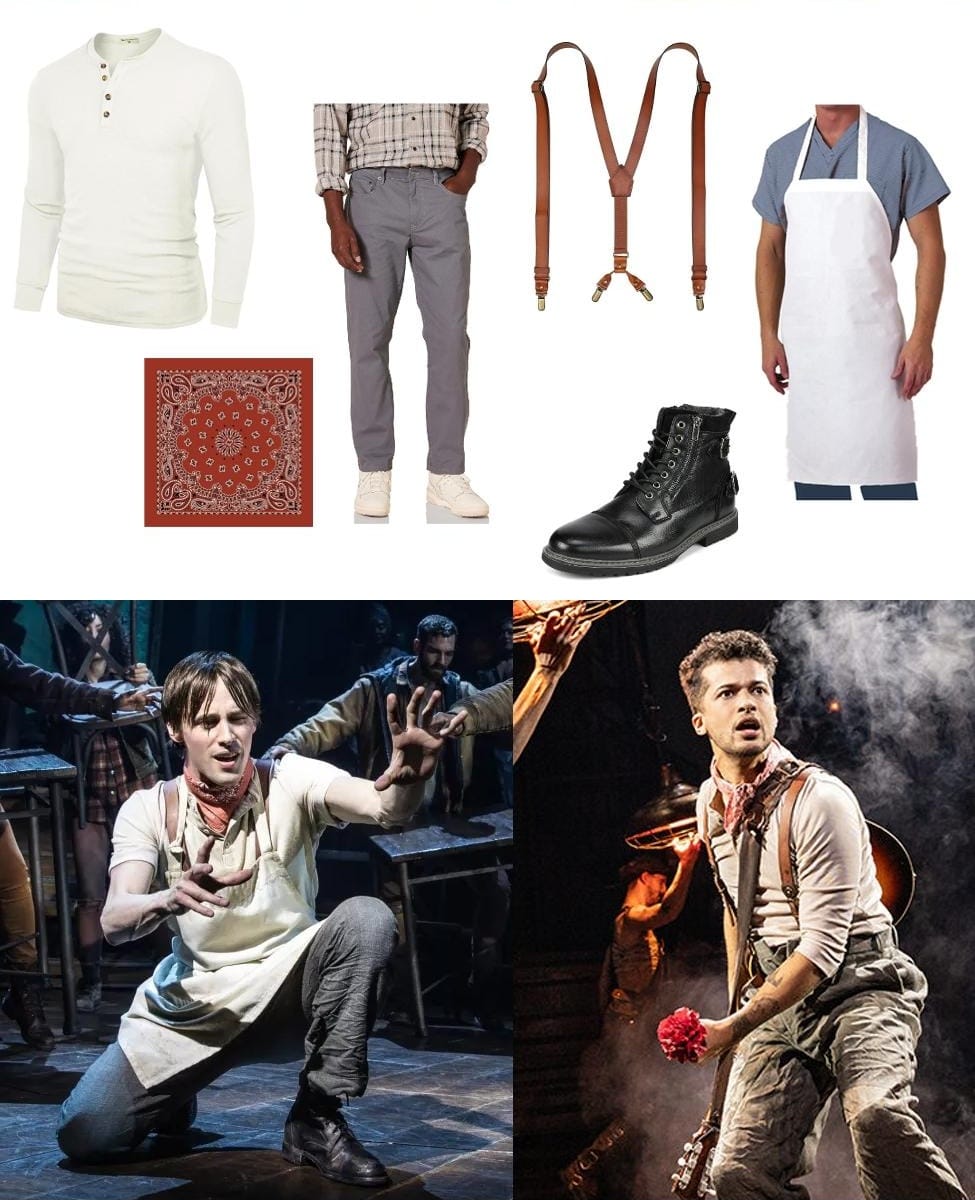
The whole costume hinges on a few specific layers working together, so start with the shirt and work outward. An off-white button-collar shirt in cotton or linen sets the tone—it should fit loosely through the body but not swallow you. Roll the sleeves to just below the elbow and leave the top button open. The collar needs to sit flat enough that the neck handkerchief and suspenders can layer over it without bunching.
Brown leather Y-back suspenders go over the shirt, not under it. The clip-on style is fine, but button suspenders will stay put better under the apron and guitar strap. Adjust them so the straps lie flat across your shoulders without digging in—you will be wearing this for hours, and the apron adds another layer across the same area.
Grey wool-blend trousers with a matte finish complete the lower half. They should sit at your natural waist and taper gently, but avoid anything slim-fit or cropped. The goal is a working-class silhouette from the 1930s or 40s, not a modern tailored look. If the trousers are too long, have them hemmed to break just above the boots.
The white work apron is what makes the costume read as Orpheus rather than just a guy in suspenders. A plain canvas or cotton apron with a waist tie and neck strap works. It should sit high enough to cover most of the chest, with the neck strap visible over the shirt collar. If the apron looks too stiff or new, crumple it up and run it through a wash cycle with a few towels to soften the fabric.
The rust-colored neck handkerchief is the single most important color accent in the costume. A square bandana folded diagonally into a strip, tied with the knot slightly off-center, then tucked into the open collar. The tails should hang down over the shirt placket but stay beneath the suspenders. A hidden safety pin through the knot will keep it from working loose during the day.
For the boots, any lace-up work boot or vintage combat boot in black or dark brown with minimal shine will work. The soles should have some tread—Orpheus spends the whole show walking. If you are buying new boots, wear them around the house for a week before the event. If you are thrifting, check the soles for separation and the leather for cracks before committing.
The two props carry the character. A single artificial red carnation can go in the shirt pocket or be held in one hand. If you want the guitar, any vintage acoustic with a natural finish and a simple leather strap works—it does not need to be a specific brand or model. The strap should go over the suspenders and apron strap, which means you will want to adjust how tightly the suspenders sit before adding the guitar.
Light weathering on the shirt and apron sells the worn-in look. Diluted black tea applied with a spray bottle, then allowed to dry and set with an iron, will give the fabric a subtle aged tint without making it look dirty. Focus the treatment on the cuffs, collar, and the hem of the apron where natural wear would occur.
Hair should look tousled but intentional—finger-combed, not styled with product. If your hair is longer, push it back from the forehead and let it fall naturally. The character is a dreamer, so the hair should look like he forgot to brush it, not like he spent time making it look that way.
More Costume Ideas

Jordan Belfort Wolf of Wall Street Costume

Dana Barrett Costume from Ghostbusters Series

Old Joseph Joestar DIY Costume Guide

Dr. Melissa King The Pitt Costume Guide

Charlie from Smiling Friends Cosplay Costume Guide: Outfit, Accessories & Styling

Annabeth Chase Costume from Percy Jackson

Trixie Tang DIY Costume Guide
Mysterion South Park Cosplay Guide
Dutch van der Linde Costume Guide: How to Recreate the Look