
Assembling the Legendary Soldier’s Field Kit
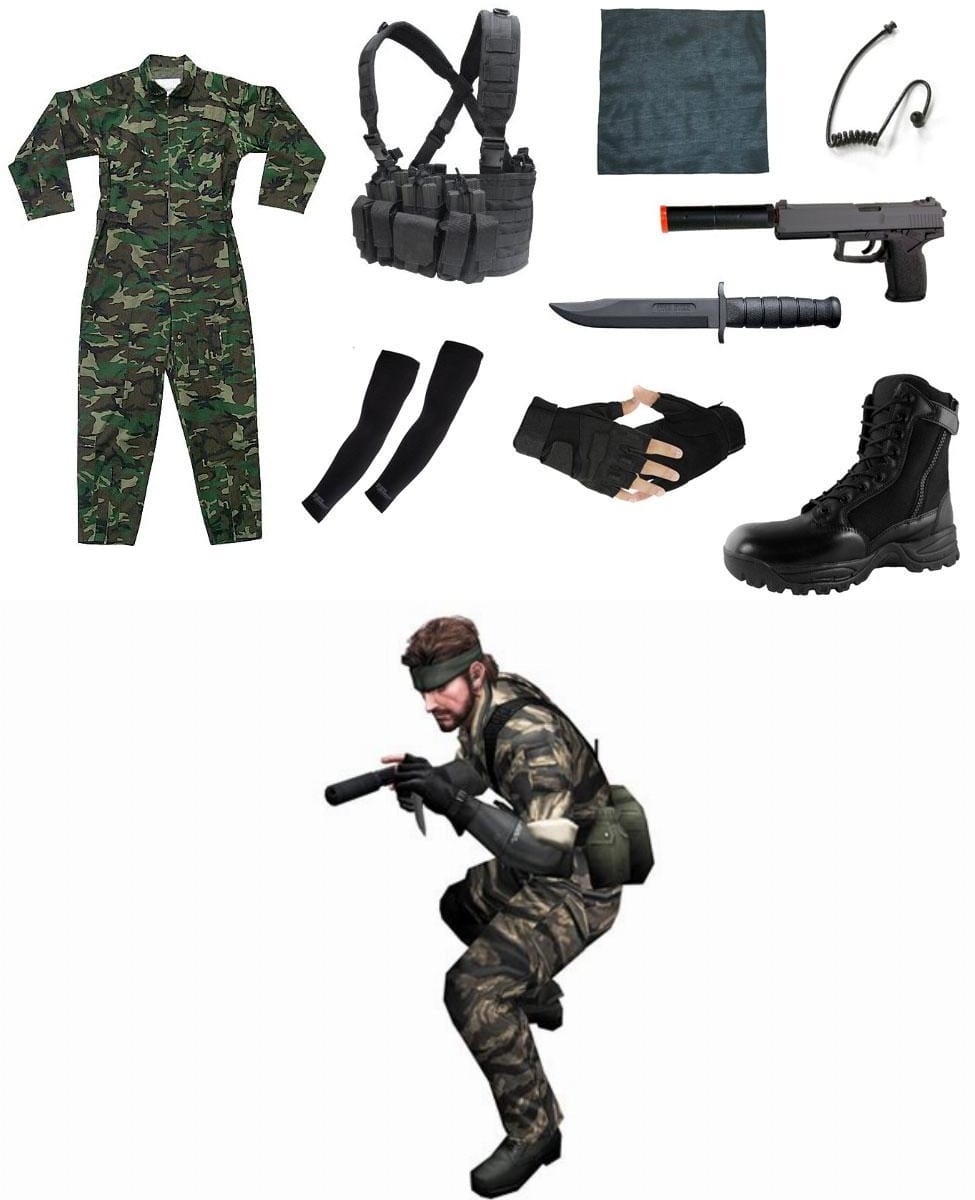
The foundation of this costume is a woodland camouflage flight suit or tactical coverall. Cotton or ripstop fabric works best, and the fit should be loose enough to move freely without looking baggy. Military surplus stores and online tactical gear retailers are the most reliable sources for this piece, and a genuine surplus suit will already have the correct pockets, zippers, and reinforced elbows that cheap replicas lack.
Black compression sleeves worn underneath give the forearms a sleek, layered appearance where the coverall sleeves are rolled or pushed up. This is a small detail, but it breaks up the solid camo pattern and adds the tactical depth the character is known for. The sleeves should be snug but not restrictive.
For the lower half, tuck the trouser cuffs into black combat boots or blouse them loosely over the boot collar. Either method works; the tucked look is cleaner and more practical for walking, while blousing gives a more field-worn appearance. Standard issue military boots in black are the right choice, and they should be broken in well before convention day.
A black recon chest rig is the most important piece after the suit itself. The rig should sit flat against the torso with the shoulder straps adjusted so the weight rests evenly and the pouches do not bounce when you walk. Many surplus chest rigs come with MOLLE webbing, which lets you attach additional pouches or a knife sheath directly to the harness.
The black bandana tied around the forehead is the single most recognizable element of this character. Tie it snugly with the knot at the back and the tails tucked under or left hanging, depending on the look you prefer. A lightweight communication earpiece worn over one ear completes the operative aesthetic, and these are inexpensive to source from military surplus or airsoft suppliers.
Tactical fingerless gloves in black are practical for handling props and keep the hands protected during long hours at a convention. The gloves should fit snugly without bunching at the palm.
For the sidearm, an airsoft pistol fitted with a barrel silencer is the standard choice. Keep it secured in a leg or hip holster with a strap that closes firmly, and check your convention’s prop policy in advance to confirm whether a blaze orange tip is required. A rubber training knife in a sheath mounted on the chest rig adds another layer of detail without creating a safety concern.
Weathering the flight suit with diluted acrylic paint or fabric chalk around the knees, elbows, and lower sleeves will give the costume a combat-tested appearance. This is optional but worth doing if you want the suit to look like it has seen actual field use rather than coming straight off a hanger.
Wear moisture-wicking undergarments beneath the coverall. The suit is heavy, and exhibition halls get warm quickly. Fasten all chest rig straps and pouch flaps tightly so nothing jingles or shifts as you move through crowds.
If you have facial hair, trim it into a neat stubble beard. Cosmetic stippling makeup can achieve a similar effect on a clean-shaven face. The posture should be upright with relaxed shoulders, and movements should be deliberate rather than rushed. For photos, low-ready weapon stances, checking corners, and touching the earpiece all fit the character’s disciplined demeanor.
More Costume Ideas
Ernest P. Worrell DIY Costume Guide

Glep Cosplay Costume Guide: Outfit, Accessories & Styling
Heart Eyes Killer Cosplay Costume Guide: Recreate the Slasher Look
TF2 Demoman DIY Cosplay Guide

Phillies Karen Costume Guide: How to Recreate the Viral Look
Jeffy from SML Cosplay Costume Guide: Outfit, Accessories & Styling

Charlotte Lost in Translation Costume Guide

Dee Dee Costume Guide: DIY Dexter's Lab Cosplay
The Beast Costume Guide: How to Recreate the Look from Over the Garden Wall