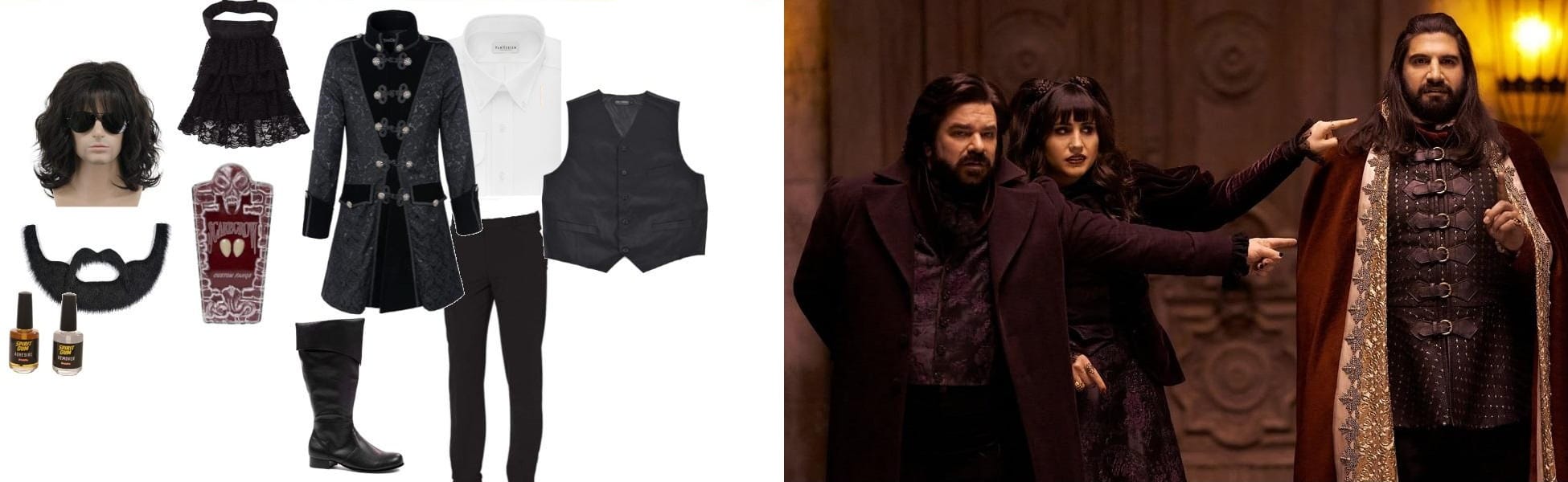
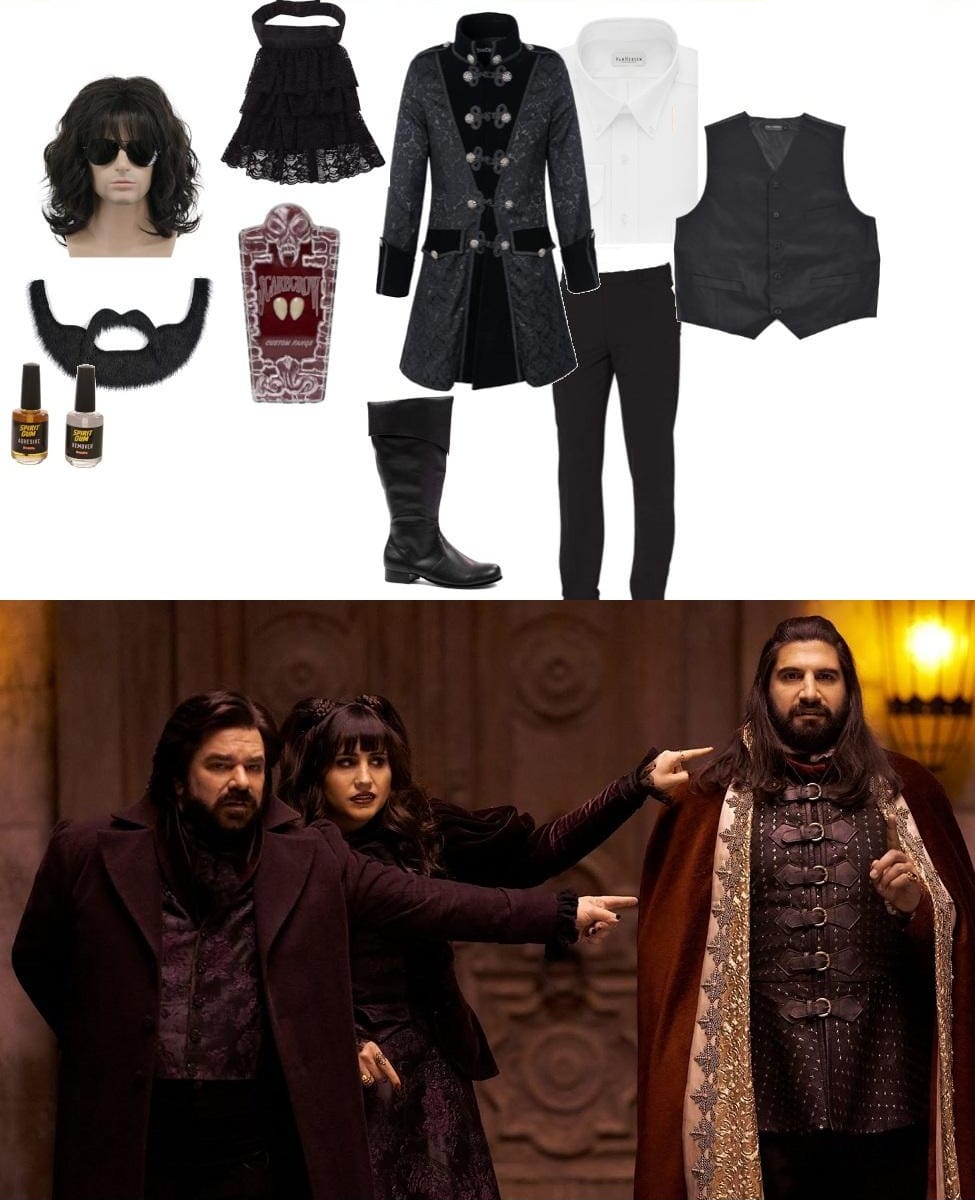
Laszlo Cravensworth dresses like an eighteenth-century aristocrat who simply refused to change with the eras. His everyday wardrobe centers on heavy Victorian silhouettes, dark ornate fabrics, and theatrical tailoring that leans heavily into gothic melodrama. Putting this outfit together means balancing historical flair with wearable layers that will not overheat under convention lighting.
The visual priority here is texture over color. Because the costume is almost entirely black, relying on flat cotton or plain polyester will flatten out the entire outfit on camera. You want contrasting surfaces—embossed brocade, glossy silk or satin, and soft lace—so each layer remains distinct.
The Statement Brocade Coat
The long coat carries the entire silhouette. Laszlo favors an open, knee-length frock coat cut with wide lapels, deep cuffs, and a pronounced flare through the skirts. A black brocade coat with a raised damask or floral weave provides the visual weight you need without requiring custom tailoring. If an off-the-rack version feels limp, adding lightweight fusible interfacing to the lapels and collar gives them the stiffness needed to stand upright behind your neck. Keep the coat unbuttoned while wearing it; Laszlo constantly pushes his coat back to display his waistcoat and shirt.
Shirt, Silk Vest, and Jabot
Beneath the outerwear sits a classic three-piece arrangement. Start with a plain white button-down shirt that features a structured collar tall enough to anchor neckwear. You do not need an antique poet shirt; an ordinary dress shirt works fine because the front placket will be entirely hidden.
Over the shirt goes a black silk or satin vest. A subtle jacquard pattern or low-sheen finish breaks up the transition between the white shirt and the heavy coat. Fasten the bottom buttons and leave the top slightly open to let the neckpiece spill over the chest.
The black jabot defines the vampire aesthetic immediately. A tiered lace or ruffled design that fastens comfortably at the throat works best. If the ruffles droop downward during movement, tack a small safety pin to the underside of the top ruffle to anchor it directly to your vest. This keeps the lace high on your chest without strangling your collarbone.
Trousers and Boots
The lower half of the costume is straightforward. Straight-leg black trousers or flat-front dress slacks keep the focus on the ornate coat above. Skip denim or athletic fabrics; standard suiting trousers fall cleanly and tuck neatly into boots without bunching up.
Pair the pants with knee-high or calf-length black boots. Riding boots or simple zippered costume boots with a modest heel and rounded toe fit the historical period. If your boots have modern rubber treads or bright metal hardware, a quick coat of matte black shoe polish or black gaffer tape over logos helps maintain the period illusion.
Hair, Beard, and Vampire Fangs
Laszlo’s grooming is unmistakably precise. His dark, thick hair features moderate volume with a loose sweep back from the forehead and soft waves at the sides. If you are styling a synthetic black wig, use a wide-tooth comb and a quick blast of warm air from a hairdryer on low heat to direct the fibers back off your face. A dab of matte pomade tames flyaways without turning the wig plastic-shiny.
The anchor beard and defined mustache require clean lines. Synthetic facial hair pieces hold their shape well, but applying them with cosmetic spirit gum or medical adhesive ensures the mustache does not peel away while you talk. Clean your skin with rubbing alcohol before applying adhesive, and press the lace backing firmly in place with a damp cloth for thirty seconds.
Custom-fit canine fangs round out the transformation. Thermoplastic bead adhesives allow you to mold individual fang caps directly over your upper canines for a snug, secure fit. Skip full-mouth plastic dentures that distort your speech; individual caps let you talk, laugh, and deliver grandiose monologues without slipping.