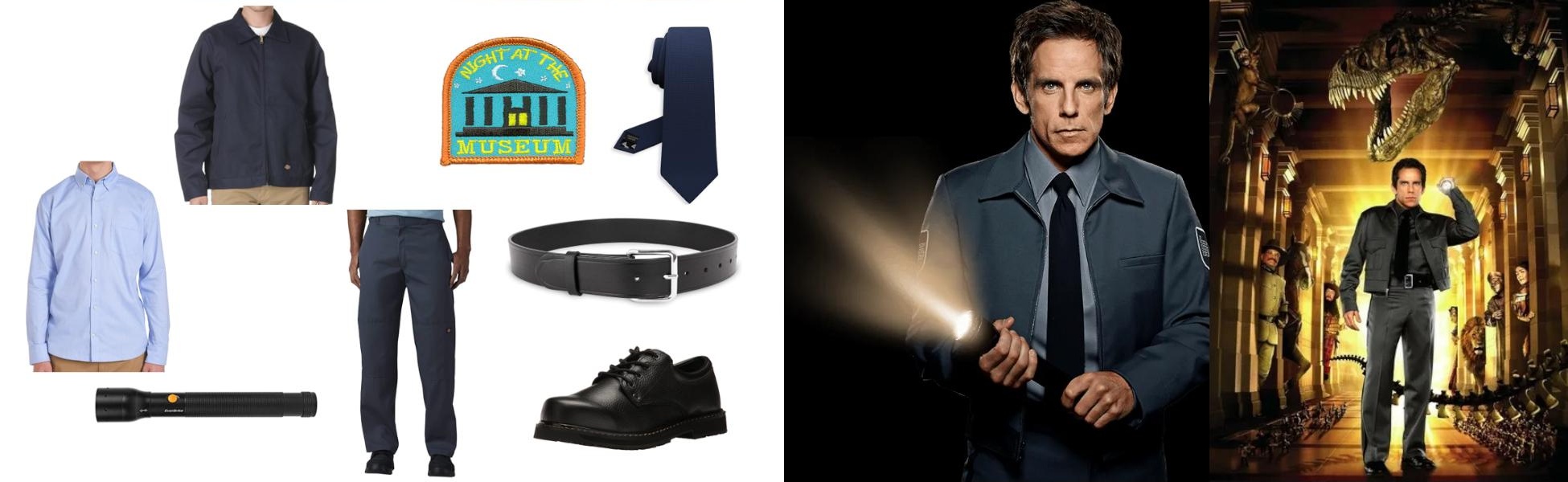




Larry Daley’s look centers on a clean, grounded American Museum of Natural History security uniform. Because the character spends his shift running through corridors and dealing with living exhibits, the clothing is practical, functional workwear rather than a theatrical costume. The visual impact relies on aligning the navy tones and placing the institutional insignia accurately.
Recreating this outfit is accessible because the garments are standard utility staples. The real work involves matching the jacket and trousers so they appear issued as a set, getting the tie seated neatly beneath the collar, and carrying the right night-shift tools.
The Museum Security Jacket and Patch
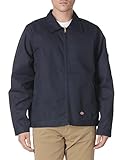
The dark navy work jacket defines the silhouette. On screen, Larry wears a classic zip-front utility jacket styled like an Eisenhower or mechanic cut, featuring a fold-over collar, slash waist pockets, and a banded waistband. Sturdy polyester-cotton blend twill works best because it maintains a crisp, structured frame and resists wrinkles while you walk around.
The museum patch gives the jacket its identity. The insignia sits on the front chest and upper sleeve. If you are using an iron-on patch, do not rely solely on the heat adhesive; heat-activated glue often loosens after a long day of wear. Run a simple perimeter whipstitch or machine stitch around the border using navy or black thread to anchor the patch permanently to the twill.
Base Layers: Shirt, Tie, and Trousers
Underneath the jacket, wear a crisp light blue button-down dress or work shirt paired with a solid dark navy necktie. Opt for a shirt with a structured collar stand so the tie knot stays elevated and visible even when the jacket zipper is pulled down mid-chest. A classic four-in-hand knot suits Larry’s practical approach to getting dressed for work.
Pair the shirt with matching dark navy work pants. Straight-leg cut utility trousers with durable belt loops and flat fronts match the film’s clean security guard aesthetic. Navy fabrics frequently vary between purple-tinted and green-tinted dye lots; inspect the trousers and jacket together under natural daylight to confirm that the shades blend smoothly.
Belt, Footwear, and Patrol Gear
Anchor the waistline with a simple black leather duty belt finished with an understated silver or brushed-metal buckle. Keep the belt narrow to standard dress-utility width rather than using an overly bulky tactical rig, which would look out of place on an educational facility guard.
For footwear, plain black work shoes, uniform oxfords, or polishable low-cut service shoes fit the setting. Choose shoes with good arch support and durable rubber soles, as you will likely spend hours standing on hard venue floors. Keep them clean and lightly buffed to reflect museum dress code standards.
Props and Finishing Touches
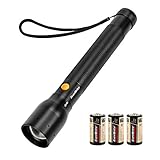
The tactical flashlight is Larry’s defining handheld prop. In the exhibits, he relies on a sturdy black duty light to investigate suspicious sounds and keep predatory displays at bay. Carrying a medium-sized tactical flashlight gives your hands something natural to hold during photos.
To flesh out the character further, clip a vintage-style brass key ring with multiple facility keys to your belt loop. You can also tuck a folded pocket-sized guidebook or notepad into the jacket pocket, reflecting Larry’s chaotic night shifts consulting the guard instructions left behind by Cecil.