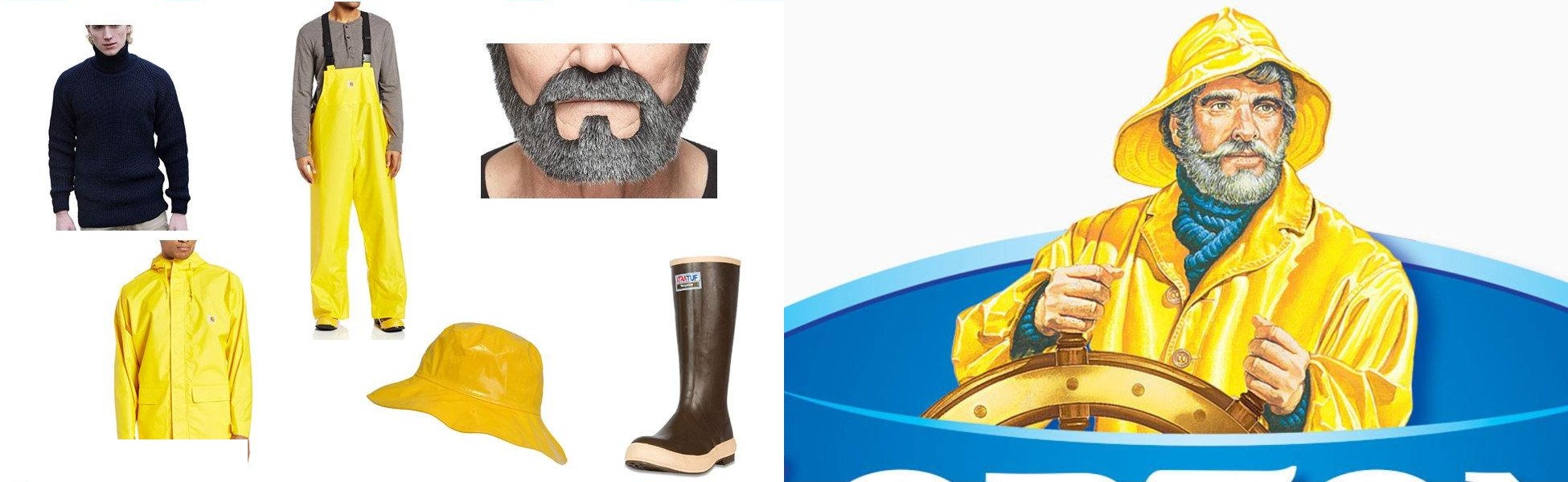
The Gorton’s Fisherman look is built around commercial-grade foul-weather gear paired with traditional Atlantic seafaring knitwear. The bright yellow oilskin silhouette carries the character immediately, but the costume relies on specific textures—heavy rubberized fabric contrasting against thick ribbed wool—rather than flat synthetic party-store materials.
Because almost every piece is functional outerwear, assembling the outfit is mostly an exercise in sourcing genuine utilitarian garments and balancing proportions so you look like someone standing at the helm of a Gloucester trawler rather than walking in a rain shower.
Yellow Foul-Weather Rain Gear
Commercial PVC rain gear has a stiff drape and semi-gloss finish that lightweight nylon windbreakers simply cannot replicate. A matched set consisting of yellow bib overalls and a hooded or collared rain jacket establishes the heavy, weather-beaten profile the character requires.
Wear the bib overalls directly over your base layers, adjusting the suspender straps so the bib sits squarely across the mid-chest. When adding the jacket, leave the front unzipped or fastened only at the waist. Keeping the upper chest open exposes the dark knit sweater beneath, which breaks up the solid wall of yellow and prevents the costume from looking like a single shapeless jumpsuit.
The Sou’wester Rain Hat
A proper sou’wester hat differs noticeably from a standard yellow bucket hat. It features an elongated rear brim designed to channel water down the back of a coat, along with an upward-canted front brim that sits low over the brow. Position the hat straight across the forehead so the back brim rests against the collar of the rain jacket, framing the face and beard.
Navy Roll-Neck Fisherman Sweater
Underneath the bright yellow shell, a dark navy ribbed or waffle-knit roll-neck sweater anchors the entire outfit. The collar needs enough body to stand upright against the throat and chin rather than slouching flat against the collarbone.
Heavy wool generates significant heat when trapped inside non-breathable PVC outer garments. If you intend to wear the costume indoors for extended periods, selecting a medium-weight cotton-blend knit provides the chunky, ribbed visual weight of maritime wool while keeping interior temperatures manageable.
Beard and Facial Hair
The character’s facial hair is a neatly trimmed, full salt-and-pepper beard with an integrated mustache. The gray and white highlights should distribute evenly across the chin and cheeks rather than appearing as isolated patches.
Before applying an adhesive beard, hold the piece against your face to check the alignment of the mouth opening and jawline. Trim away any excess lace or mesh backing along the cheeks so the synthetic hair blends cleanly into your skin. A light coat of spirit gum along the upper lip and cheek line keeps the edges anchored securely when speaking or smiling.
Deck Boots and Stance
Dark brown commercial fishing boots or sturdy rubber deck boots ground the bottom of the outfit. Rather than tucking the bib overall legs into the boot shafts, pull the wide pant cuffs down over the boot tops. Letting the hems fall loosely around the ankles mimics how deckhands actually wear foul-weather pants to prevent water from running into their footwear, giving the lower body a natural, working silhouette.