
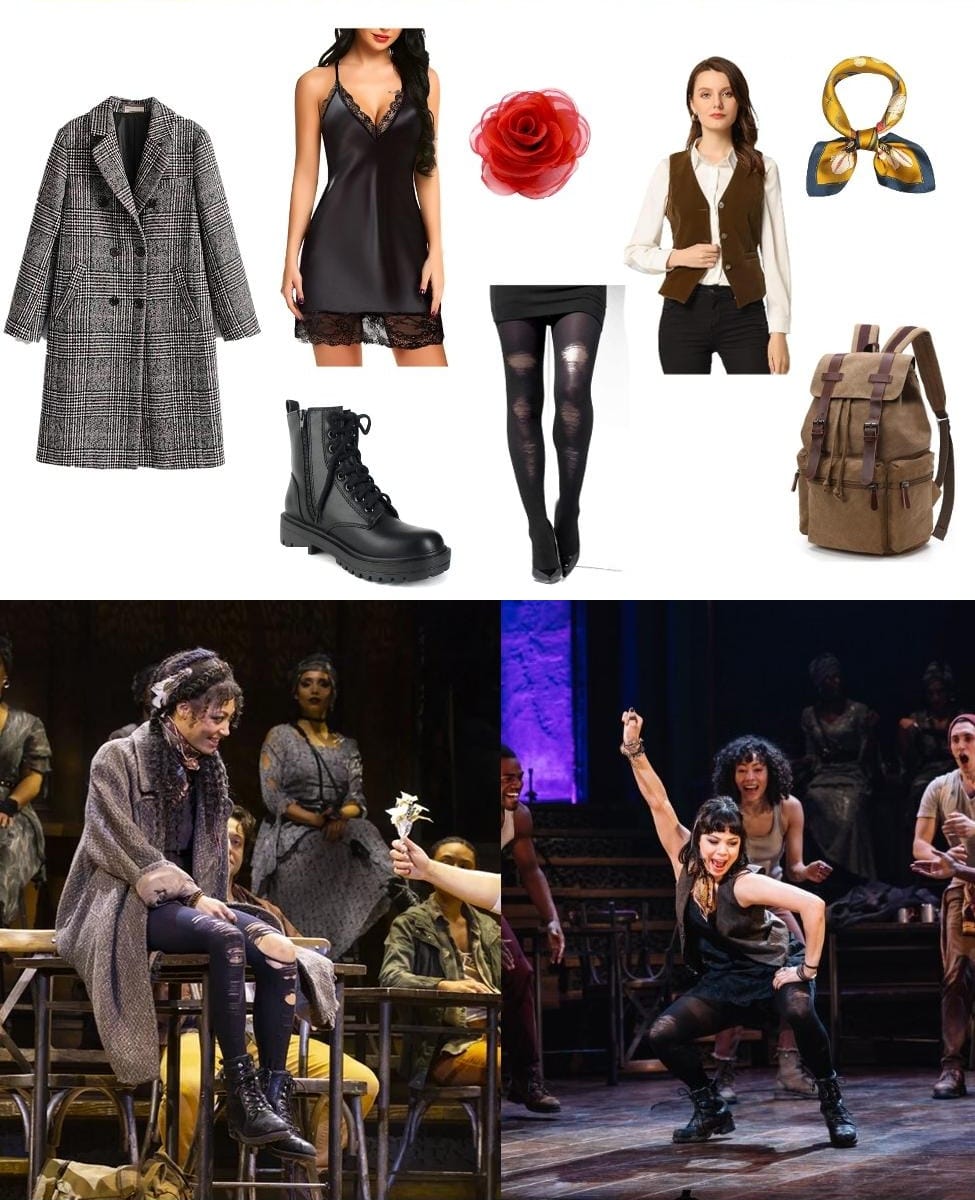




Building Eurydice’s Layered Road-Worn Silhouette
The foundation is a simple black slip dress with lace trim along the neckline and hem. The lace should be delicate rather than ornate—think vintage lingerie detail rather than bridal decoration. You want the dress to sit close to the body but not tight, since it will be covered by multiple layers. A thrifted satin or rayon slip works perfectly; if the straps are adjustable, you can fine-tune where the lace sits against your collarbone.
Over the slip dress goes a fitted brown vest in tweed, corduroy, or textured cotton. The vest should close snugly at the waist to create structure against the looser pieces around it. If you find one that’s slightly too large, taking in the side seams or adding a hidden back cinch will give you that tailored shape without altering the visible front. The brown needs to be earthy and muted—rust, tobacco, or warm taupe all work better than a bright chestnut.
The outer jacket is where the costume gains its character. Look for something oversized and slouchy in olive, khaki, or a desaturated earth tone, preferably with a soft, lived-in texture like brushed cotton or wool-blend canvas. The collar matters more than you might expect: Eurydice’s jacket reads as something she pulls tight around herself, so a generous collar you can turn up or gather at the neck will help you capture that guarded posture. If the jacket looks too clean, sand down the edges of the cuffs and hem with coarse sandpaper, and use a dry brush with diluted brown acrylic paint to add subtle wear along the shoulders and elbows.
Black tights with runs and laddered texture complete the lower half. You can distress a new pair by gently dragging fine sandpaper across the fabric, or simply buy a pair with visible snags. The key is that the damage looks incidental, not deliberate—light, scattered runs rather than large rips. Pair them with rugged black combat boots that have visible sole tread and scuff marks. Break them in before the event by wearing them around the house for a few days; a costume that requires limping by hour three isn’t worth the accuracy.
The yellow scarf is the single most important color decision in this costume. It should be a vivid, warm gold—think marigold or sunflower—in a lightweight silk or silk-blend fabric that drapes loosely. Tie it around your neck with the ends hanging unevenly between your jacket lapels, or knot it once at the side so it sits like a loose cravat. This is the piece that makes the costume read as Eurydice from across a convention hall, so it’s worth taking time to find the right shade rather than settling for a pale butter yellow.
A vintage-style brown canvas rucksack serves as both prop and practical bag. Look for one with leather straps and a simple drawstring or buckle closure; the shape should be rounded and soft rather than structured. This is where you’ll store your phone, wallet, and any supplies for the day, so make sure the straps sit comfortably on your shoulders over the jacket. The final prop is a single red carnation, which you can carry in hand or tuck into a buttonhole on the vest or jacket. Real flowers wilt quickly under convention lights, so use a high-quality faux carnation—the kind with fabric petals rather than plastic—and keep a second one in your rucksack as backup.
For hair and makeup, keep everything deliberately undone. Soft tousled waves or a loose low bun with strands escaping around the face work best; the style should look like it survived wind and travel rather than a styling session. Makeup stays matte and minimal: earthy brown eyeshadow blended softly across the lid, smudged brown liner rather than crisp black, and a berry or nude lip stain. A faint highlight on the cheekbones is enough to suggest vulnerability without breaking the grounded, natural aesthetic.
More Costume Ideas

Alice, Sweet Alice DIY Costume Guide

London Tipton DIY Costume Guide

Richie Tozier DIY Costume Guide

Clara Oswald Waitress Costume from Doctor Who

Bill the Butcher DIY Costume Guide

Vito Scaletta Mafia II Costume Guide

Venetia from Saltburn DIY Costume Guide
Hayley Smith DIY Costume Guide

Sam from Until Dawn DIY Costume Guide