
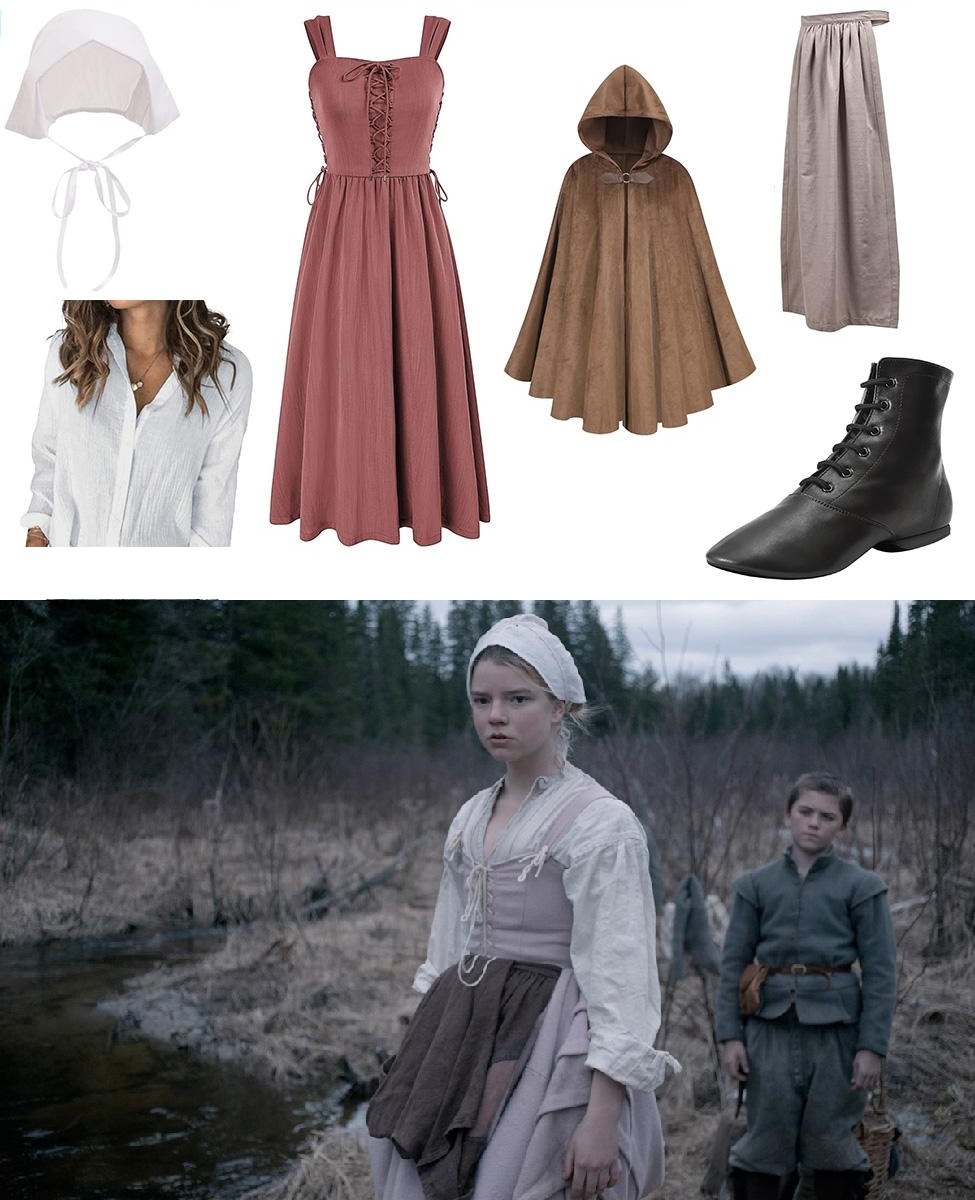
Thomasin’s wardrobe in The Witch relies on strict historical realism: 1630s New England Puritan working attire. Everything she wears reflects daily farm labor, isolation, and harsh frontier conditions. There are no ornamental frills or fantasy embellishments here, just functional garments built for utility.
The silhouette centers on heavy layering—a high-necked linen shift under a structured, front-laced bodice and full skirt, topped with an apron, a linen coif, and a wool mantle for outdoor chores. Recreating her appearance successfully comes down to matching that utilitarian shape and distressing the fabrics so they look weathered by life on a bleak homestead.
The Core Dress and Shift
Her main outfit consists of a fitted kirtle—a sleeveless bodice laced tightly down the front over an ankle-length petticoat. A dusty rose renaissance cottagecore sleeveless lace-up dress provides that two-in-one base profile quickly. Because mass-produced dresses often ship with shiny synthetic ribbon, replacing the ties with dull waxed cord, twill tape, or flat leather lacing instantly grounds the piece in the seventeenth century.
Underneath sits a white linen blouse acting as her shift. The chemise fabric should show at the scoop neckline and along the forearms. Choose sleeves that gather gently at the wrists and fit cleanly under the armholes without bunching up under the laced bodice.
Apron and Outdoor Cloak
A tied linen half-apron sits directly over the skirt waistband. Thomasin spends most of the film handling livestock and farm chores, meaning the apron is virtually a permanent fixture of her everyday clothes. It breaks up the solid tone of the skirt and gives your hands a natural place to gather fabric when walking.
For scenes outside the cabin, she wraps herself in a dark mantle. A brown cloak gives you that heavy, protective barrier against the cold woods. Choose a cloak with enough fabric weight to drape naturally straight down rather than fluttering in light breezes, and pin or clasp the throat securely so it stays balanced over the shoulders.
The Bonnet and Hair
Puritan custom required women to keep their hair covered both inside the home and outside. Thomasin wears a close-fitting coif that completely encloses her braided blonde hair, leaving only a hint of parting exposed at the forehead. A white cotton pioneer bonnet serves as a dependable starting piece. You can press the brim back slightly or tie the chin ribbons loosely behind the neck to mirror a traditional seventeenth-century linen cap rather than an exaggerated nineteenth-century sunbonnet.
Footwear
Farm shoes of the era were simple, heavy leather work footwear without modern polish or ornate hardware. Black faux-leather lace boots provide the right sturdy, ankle-height profile beneath the skirt hem. Since the skirt falls nearly to the ground, only the toe and lower lacing remain visible, so a plain rounded toe and flat sole keep the look grounded and practical for hours on your feet.
Weathering the Fabrics
The biggest difference between a convincing historical costume and an unconvincing stage outfit is patina. Settlers on a clearing in 1630 wore hand-loomed homespun cloth stained by woodsmoke, damp timber, and soil. Pristine white cotton and crisp pastels look out of place for someone living on a failing farm.
Steeping the white blouse, bonnet, and apron in a diluted black tea bath softens modern fluorescent white into an aged, unbleached linen tone. Stippling watered-down brown acrylic wash, fuller’s earth, or chalk along the lower hemline of the skirt and apron mimics years of working in damp earth. The goal is to make the entire wardrobe look worn, washed, and exposed to the elements.
More Costume Ideas

Pamela Voorhees DIY Costume Guide

Big Jack Horner Costume Guide: How to Recreate the Look

Mint Aizawa Tokyo Mew Mew Cosplay Guide

Mara Jade Skywalker DIY Costume Guide

Sodapop Curtis DIY Costume Guide

Unella the Shame Nun DIY Costume Guide

Lube Man Watchmen DIY Costume Guide

Cindy Campbell Scary Movie 2 Costume Guide

Target Lady DIY Costume Guide