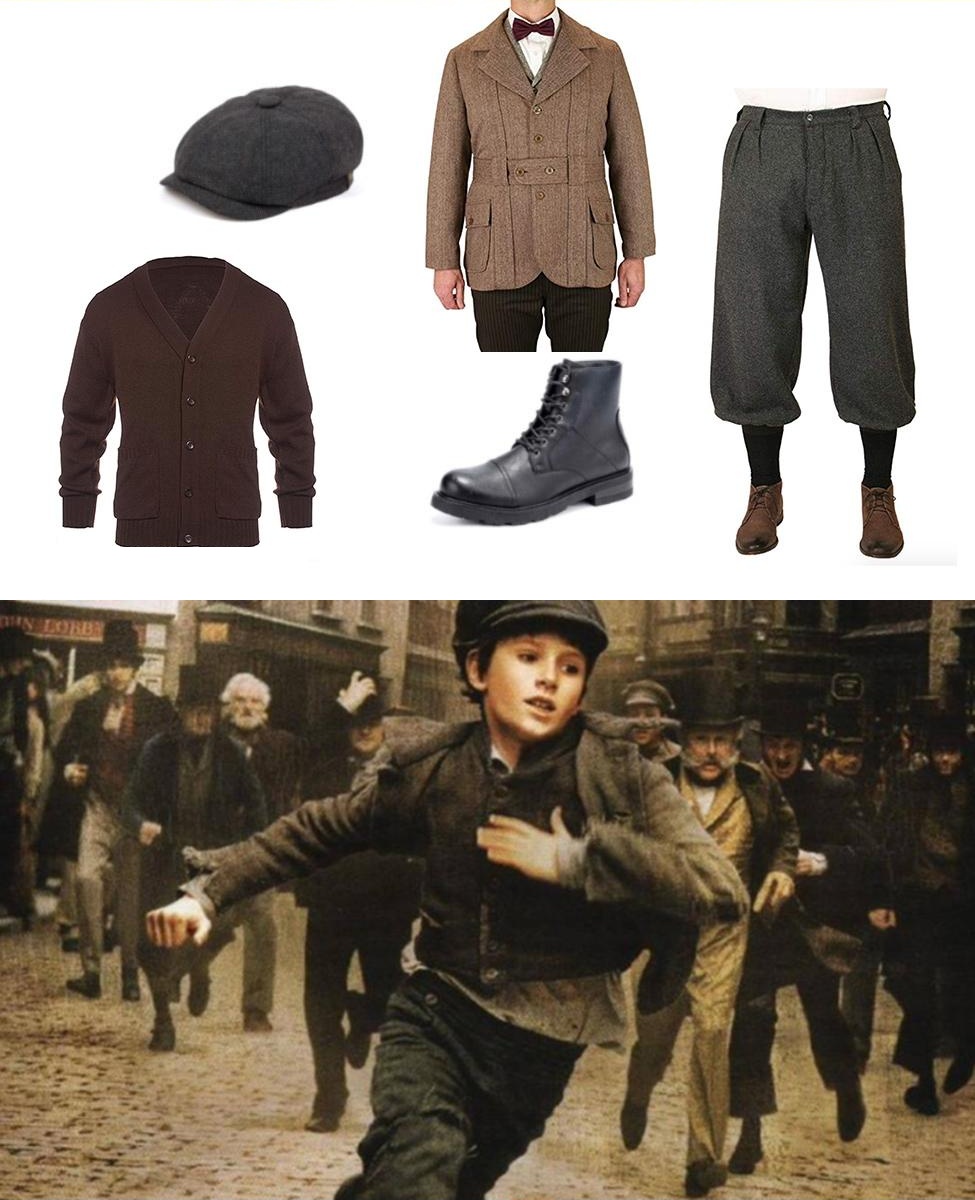


Recreating Oliver Twist comes down to capturing the silhouette of a nineteenth-century London workhouse boy without making the outfit look like an immaculate period drama costume. The character relies on heavy, mismatched textures—rough wool, tweed, and knitwear—worn in practical layers that suggest hand-me-downs rather than a tailored wardrobe.
Because the core pieces are classic cold-weather garments, assembling the outfit is mostly an exercise in selecting the right cuts, proportions, and finishes. Getting the oversized, rumpled drape right matters far more than sourcing rare specialty items.
Tweed Layers and Knitwear
The foundation of the upper body starts with a plain collarless or soft-collared shirt, typically off-white, light gray, or unbleached linen. Over this goes a Brown Button Cardigan, which provides an intermediate layer between the shirt and outer coat. A chunky knit with ribbed cuffs works well here, especially if the buttons look wooden, horn, or dull plastic rather than modern glossy acrylic. Leaving the cardigan partially unbuttoned or slightly stretched out around the hem gives it the broken-in look expected of an orphan’s clothing.
Over the knitwear sits the Tan Wool-Blend Herringbone Tweed Jacket. Rather than choosing a structured modern blazer, aim for a jacket with a looser cut, natural shoulders, and a coarse weave. Herringbone and tweed are ideal because their visual weight instantly evokes the Victorian period. If the jacket feels a little broad in the shoulders or long in the sleeves, that actually works in your favor; Oliver’s clothes were notoriously ill-fitting garments passed down from older boys or adults. Rolling the cuffs slightly back or letting them hang loose over the knuckles reinforces the undersized, vulnerable stature of the character.
Knickers and Footwear
For trousers, the Gray Tweed Herringbone Knickers define the lower half of the silhouette. Traditional knee-length breeches or knickers were standard attire for boys throughout the nineteenth century, cut fuller through the thigh and gathered below the knee with a buttoned or buckled cuff. Pairing a gray tweed pattern with the tan herringbone jacket creates the mismatched, piecemeal wardrobe central to the character.
Under the knickers, heavy wool socks or ribbed knee-high stockings in muted oatmeal, gray, or charcoal bridge the gap to the footwear. Sturdy Black Boots anchor the outfit. Plain ankle boots or lace-up work boots with round toes and minimal modern detailing work best. Synthetic shine will ruin the historical illusion, so buff down any glossy finish with matte shoe cream, or let dust dull the leather.
The Newsboy Cap and Weathering
A Dark Grey Newsboy Hat completes the headwear. The eight-panel baker boy style with a central button sits slouchy and soft, pulled down slightly over the brow or pushed back toward the crown of the head. Avoid stiff, rigid flat caps that hold a crisp profile; you want something pliable that can be crushed, shaped, and worn with a slight tilt.
The difference between looking like a Victorian schoolboy and looking like Oliver Twist lies in distressing. Freshly unboxed retail clothes look entirely too clean for a boy wandering the streets of London. Light distressing can be done quickly without destroying the garments. Dusting fabric edges, knees, elbows, and pocket flaps with diluted brown acrylic wash, fuller’s earth, or pulverized cosmetic chalk breaks up the clean factory sheen. Fraying a loose thread on a hem or rubbing sandpaper gently against stiff tweed softens the fibers and produces an authentic, lived-in texture.
More Costume Ideas
Carlos Oliveira RE3 Remake Cosplay Guide
Rita Loud from The Loud House Costume Guide
Moira O’Hara American Horror Story Costume
Spooky Month Pump Cosplay Guide
Knuckles the Echidna Cosplay Costume Guide: Outfit, Accessories & Styling

Mustafa Austin Powers Costume Guide
Richie Rich Harvey Girls Forever Costume Guide
Remus Lupin Cosplay Costume Guide
Brutus from Gentlemen Broncos Costume Guide