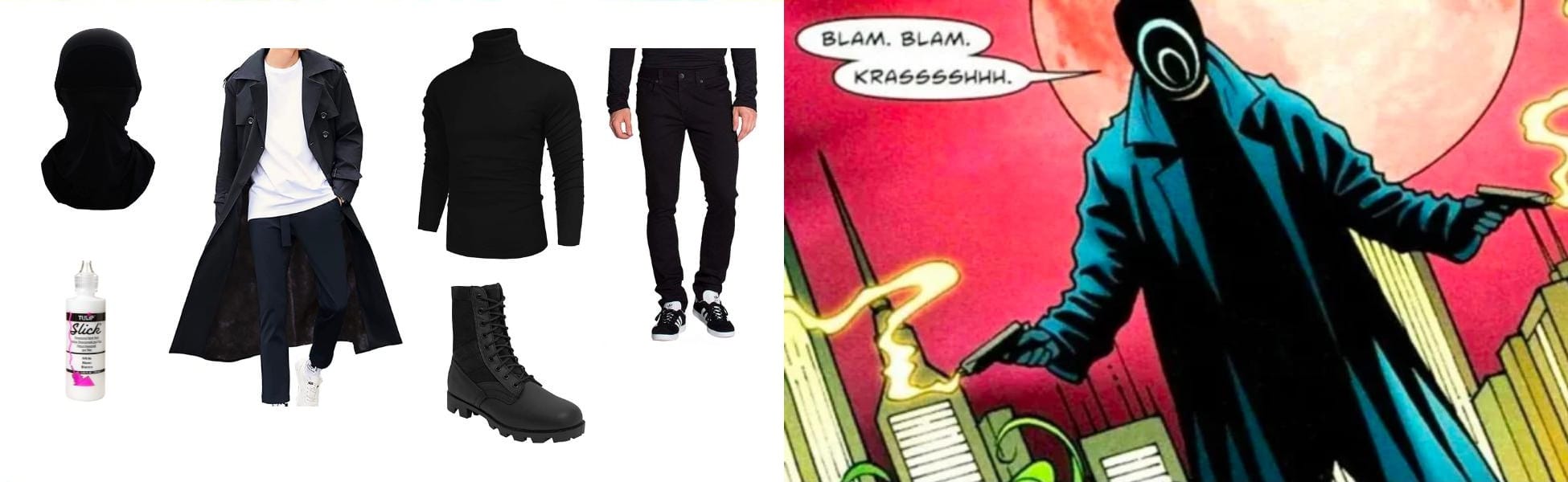
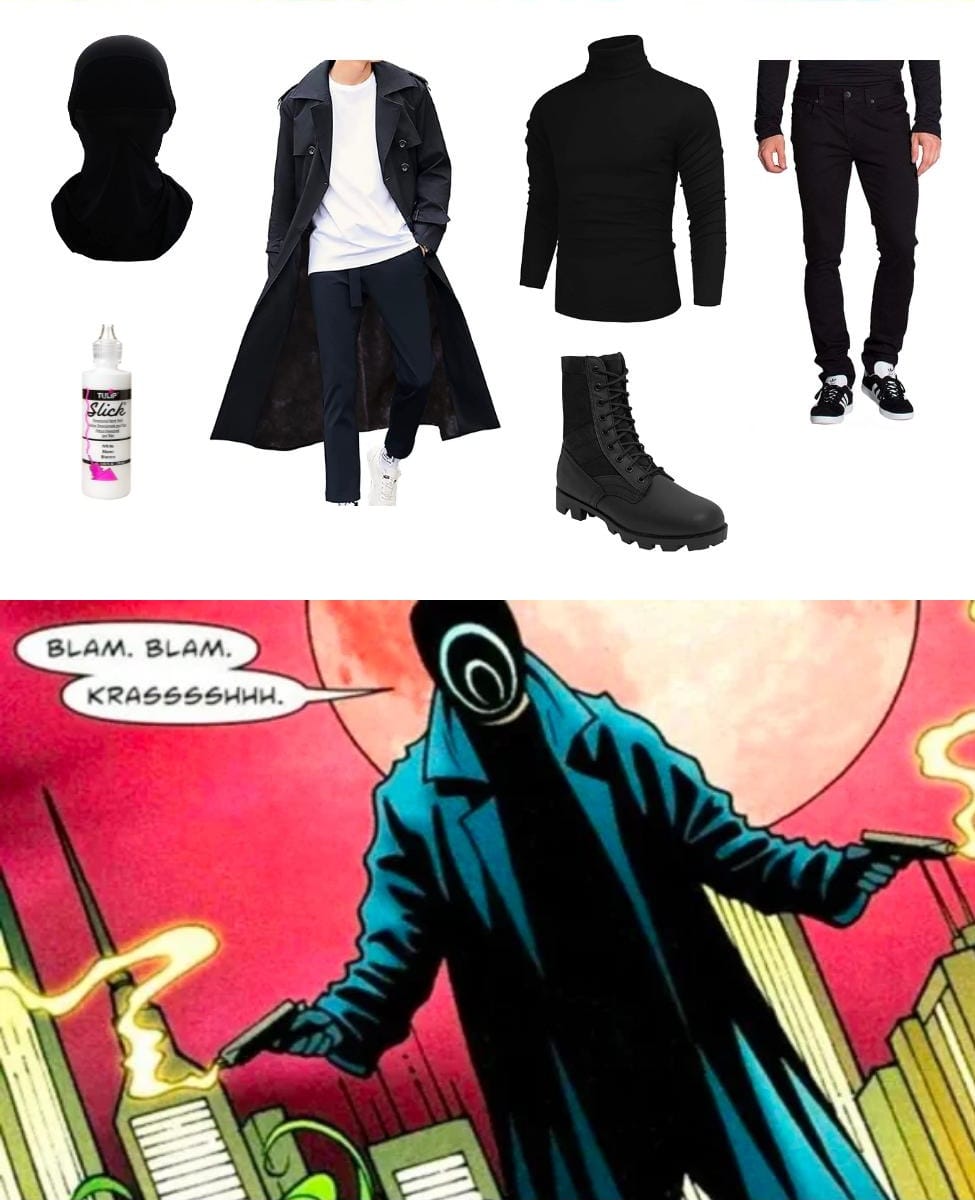




Onomatopoeia relies on stark, high-contrast simplicity. The entire outfit is matte black from head to toe, broken only by the concentric white target rings painted across the face. Because the design is stripped of flashy superhero armor or colorful capes, the visual impact comes down to clean execution and silhouette.
Building this costume doesn’t demand advanced tailoring or complicated armor fabrication. Most of the pieces come from dark streetwear and utilitarian staples, meaning you can focus your effort on getting the coat proportions right and painting a crisp, symmetrical mask.
Crafting the Target Mask
The mask is the single element that defines Onomatopoeia. A plain black balaclava provides the base, fitting snugly against the head and neck without loose bunching around the jaw. Painting concentric circles directly onto an unstretched balaclava will result in warped, oval rings once you put it on, so stretching the fabric over a foam head or round form before painting is essential.
Use flexible white fabric paint rather than standard acrylics, which tend to crack and peel once the knit material stretches over your face. Lightly trace the circle guidelines with tailor’s chalk first, working outward from the center point of the face. Apply thin coats and allow each pass to dry thoroughly so the rings stay opaque and clean without stiffening the fabric so much that it restricts breathing.
If your balaclava covers the eyes entirely, visibility can be an issue in dim convention spaces. Stenciling the white paint thinly across the eye region or inserting a breathable dark mesh panel on the inside helps maintain your field of view while keeping your eyes hidden from the outside.
The Trenchcoat and Layering
Onomatopoeia wears a long black trenchcoat that extends down past the knees to the calves, giving the character a heavy, grounded profile. A structured trenchcoat with wide lapels and deep pockets maintains the proper proportions. Medium-weight wool blends, heavy cotton twill, or matte synthetic fabrics hang with realistic drape, avoiding the cheap shine that thin costume fabrics produce under flash photography.
Underneath the coat, a fitted black turtleneck serves as the core base layer. A ribbed or jersey knit turtleneck bridges the seam between the balaclava and the coat’s lapels, concealing every trace of skin along the throat and creating a clean, seamless black column beneath the outerwear. Keeping the undershirt lightweight prevents overheating under the heavy coat.
Trousers and Boots
Straight-leg black pants or durable tactical trousers complete the lower half. Trousers with a clean taper or modest cargo pockets keep the silhouette neat rather than baggy. The fabric needs enough give for natural movement while sitting trim against the legs so the cuffs tuck smoothly into your footwear without bunching up.
Sturdy black combat boots round out the build. Solid leather or matte synthetic tactical boots provide reliable ankle support and foot comfort during long hours at conventions, while reinforcing the character’s pragmatic, lethal aesthetic. Lacing them tight over the tucked trouser cuffs keeps the lines clean and prevents the hems from slipping out.