
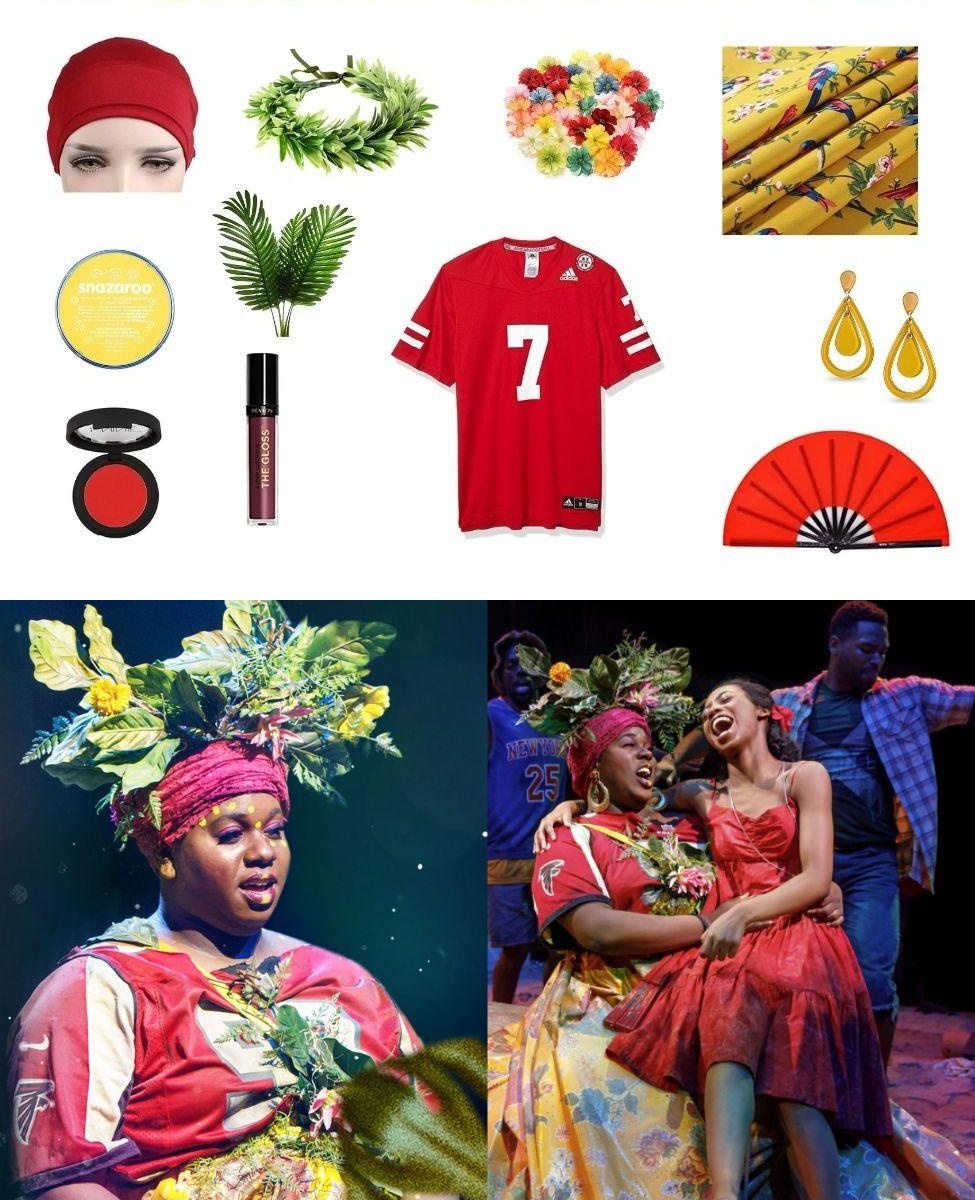
What You’ll Need

Red Bandana

Yellow Face Paint

Red Eyeshadow

Maroon Lip Gloss

Fake Palm Tree Leaves

Leaf Headdress

Craft Flowers

Red Sports Jersey

Yellow Floral Tablecloth

Earrings

Red Fan
Asaka’s stage appearance centers on an intentional clash between everyday recycled materials and lush, organic abundance. The upper body stays grounded in simple athletic wear, while the lower half expands into massive, brightly draped domestic textiles topped with a wild crown of tropical greenery.
Recreating this look is less about precision tailoring and more about silhouette, volume, and secure fastening. Getting the drape of the heavy printed skirt right and balancing the foliage headdress will do most of the visual work.
The Jersey and Base Layer
The foundation of the torso is a bright red athletic jersey. A loose, breathable sports mesh cut works well here, sitting comfortably over whatever cooling layers or undergarments you choose to wear underneath. It contrasts sharply with the botanical and floral textures surrounding it, so you do not need to distress or alter the shirt. Let the jersey hang naturally over the waistband where the skirt begins.
Because you will be wearing a high-volume skirt anchored at the waist, sizing the jersey slightly oversized lets it blouse over the waistband without pulling taut when you raise your arms. Leaving the sleeves unhemmed or loosely rolled matches the casual, found-object aesthetic established in the Broadway revival staging.
Building the Tablecloth Skirt
The massive, gathered skirt is the heaviest visual element of the costume. On stage, this look comes from vibrant domestic fabric draped with sweeping fullness. A large yellow floral tablecloth provides the sunny base color, dense pattern, and heavier drape needed to hold its shape without collapsing.
If you are assembling this without advanced pattern drafting, gather the fabric along a wide, sturdy waistband or heavy-duty elastic rather than relying on standard dress-weight elastic, which can roll under the weight. Pinning pleats into place along a canvas belt strip before stitching ensures the yellow fabric fans outward generously from the hips.
Consider leaving a few inches of clearance between the hem and the floor so you do not step on the fabric while walking or turning. If the tablecloth material is slick, adding a cotton underskirt or simple petticoat beneath it keeps the gathers pushed outward and stops the heavy folds from tangling between your legs.
The Foliage Crown
The headpiece sits high and wide, fanning out around the head like an overgrown tropical canopy. Start by tying down your hair with a red bandana to provide friction and an anchor point for pins and hair clips. This base keeps heavy headbands from slipping forward as you move.
For the structure itself, build upon a sturdy leaf headdress foundation. You can bulk up the height and reach by wiring in large fake palm tree leaves behind the main crown, letting them spread upward and backward. Weaving bright craft flowers into the base of the leaves softens the transition between the bandana and the foliage while adding bursts of contrasting color along the forehead.
Keep hot glue and wire wraps clean on the interior of the band, lining the inside with a strip of felt if any wire ends poke through. Weight adds up quickly on headpieces, so test the balance by walking and tilting your head before securing everything permanently.
Makeup and Small Accents
Asaka’s stage makeup relies on bold warmth and theatrical definition. Sweep yellow face paint across the high points of the face or temple zones to catch the light against red eyeshadow blended along the lids. A deep maroon lip gloss anchors the lower half of the face with saturated color that holds up against the vivid red and yellow textiles.
Finish the styling with statement earrings and a red fan. The fan serves double duty: it works as an expressive stage prop during movement and provides practical airflow under heavy fabric and warm lighting. Opt for clip-on or lightweight drop earrings so they do not catch on the spreading foliage of the headdress when you turn your head.
More Costume Ideas
Haruko Haruhara FLCL Cosplay Guide
DIY Pimp Kramer Costume Guide

The Fates from Hadestown DIY Costume Guide

Amy Wong Cosplay Costume Guide

Wendy Testaburger DIY Costume Guide

DIY Baldi Costume Guide

Harold Hutchins DIY Costume Guide

Professor Utonium Cosplay Guide

Delores Costume from Beetlejuice