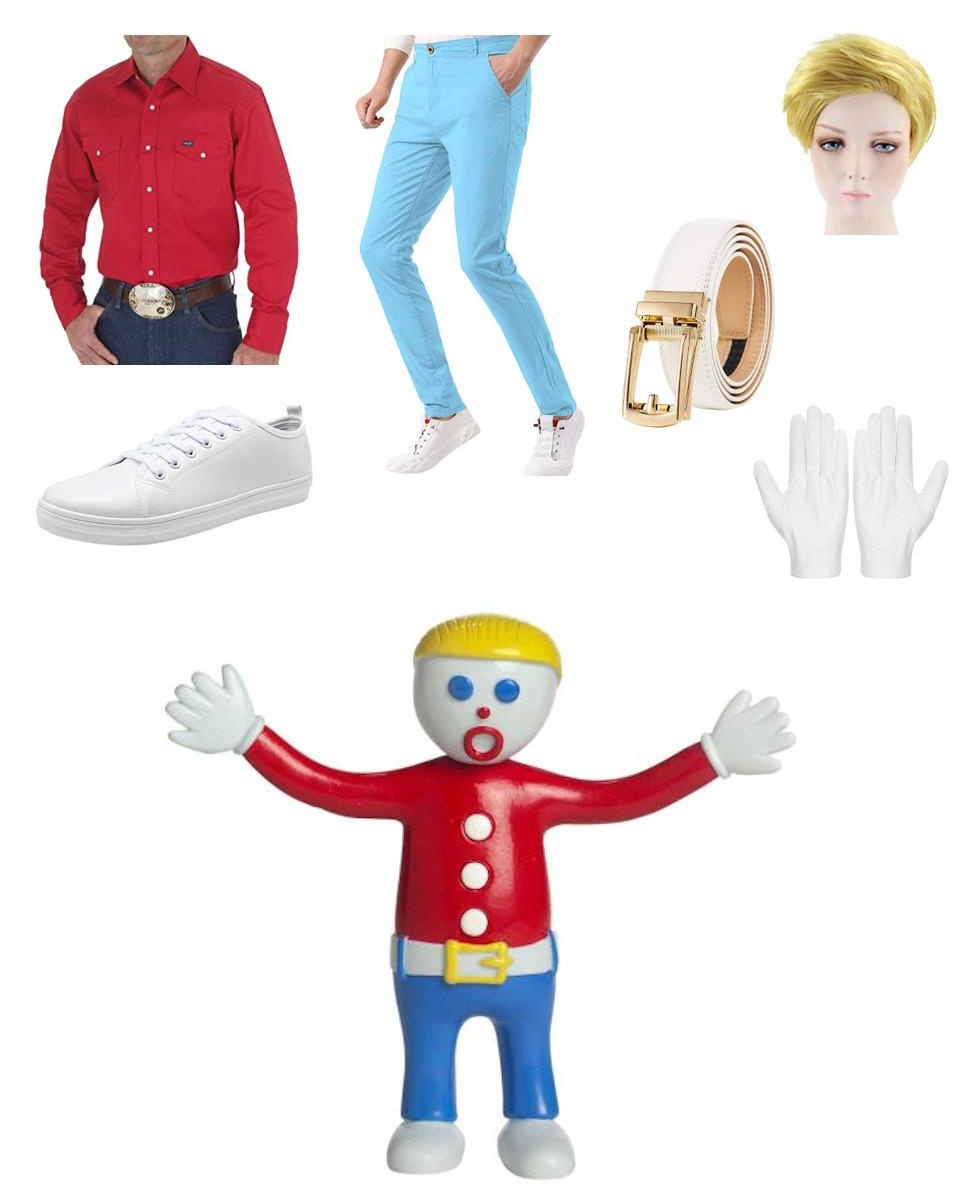
Mr. Bill’s appearance is rooted in 1970s stop-motion clay animation, defined by stark, unshaded primary colors and deliberately crude proportions. Translating a doughy television figurine into a wearable outfit means working with bold blocks of solid color: bright red on top, pale blue below, and clean white dividing them at the waist, hands, and feet.
Because the original puppet has no fabric texture or tailored drape, human-scale adaptations work best when the garments remain flat, smooth, and free of logos, patterns, or heavy distressing. The objective is a crisp, graphic silhouette that mirrors the simple shapes Walter Williams sculpted for the camera.
The Shirt and Trousers
The red top serves as the visual centerpiece of the outfit. On the clay model, Mr. Bill sports a simple red torso accented by a vertical row of oversized white buttons down the front. A standard red button-up shirt or polo provides the base garment, though swapping standard translucent buttons for broad, opaque white buttons establishes the character’s Saturday Night Live identity immediately.
For the lower half, light blue slim-fit trousers provide the pastel contrast seen in the classic shorts. Clay limbs have no denim fading, cargo pockets, or heavy stitching, so flat-front chinos or casual trousers in a uniform sky blue hue reflect the animation aesthetic cleanly. Choosing a straight or tapered cut keeps the leg lines tidy against the shoes.
Cinching the waist with a white belt establishes the cartoon boundary between the red torso and blue legs. A simple white belt featuring a gold-tone clasp breaks up the primary colors at the natural waistline, matching the strip of white clay wrapped around the puppet’s midsection.
Hair and Face Styling
Mr. Bill’s hair consists of bright yellow clay rolled into tight curls across his crown. A short blond synthetic wig offers the right foundation, particularly styles with soft waves or tight curls rather than a sleek, straight cut.
To echo the dense, clumpy texture of sculpted dough, separating sections of the synthetic fibers with a dab of matte styling paste or hair wax helps prevent the wig from appearing too airy or realistic. Lightly patting down the crown while keeping the sides textured creates the slightly compressed, handmade silhouette of the original puppet.
The character’s wide-eyed panic is his defining visual cue. Rather than wearing a restrictive full-head mask, cosmetic face paint achieves the look comfortably. Applying clean circles of light blue around the eyes with dark pupils, placing a red circle on the bridge of the nose, and painting a wide open red smile recreates the puppet’s expression while allowing full visibility and normal speech.
Hands and Footwear
Plain white cotton gloves cover the hands to emulate the smooth, rounded clay appendages from the sketches. Lightweight inspection or formal parade gloves work well because they fit cleanly around the fingers without adding bulky thermal linings, visible logos, or prominent seams.
Simple low-top white sneakers complete the bottom half. Since the original animation featured rounded white clay feet without branding or complex tread patterns, basic canvas or smooth white leather sneakers keep the lower proportions minimal, flat, and unobtrusive.
More Costume Ideas
Ryan Evans High School Musical Costume Guide
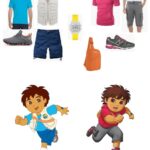
Diego Márquez from Go, Diego, Go! Costume Guide
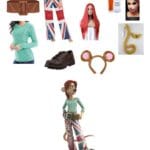
Rita Malone Flushed Away Costume Guide
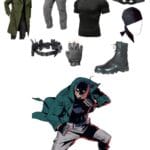
Knuckleduster Cosplay Costume Guide: Outfit, Accessories & Styling
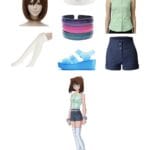
Téa Gardner DIY Costume Guide

Libby Stein-Torres Costume Guide
Joseph Seed Far Cry 5 Costume Guide
Sara Cosplay Costume Guide: DIY Over the Garden Wall Outfit

Unella the Shame Nun Costume from Game of Thrones