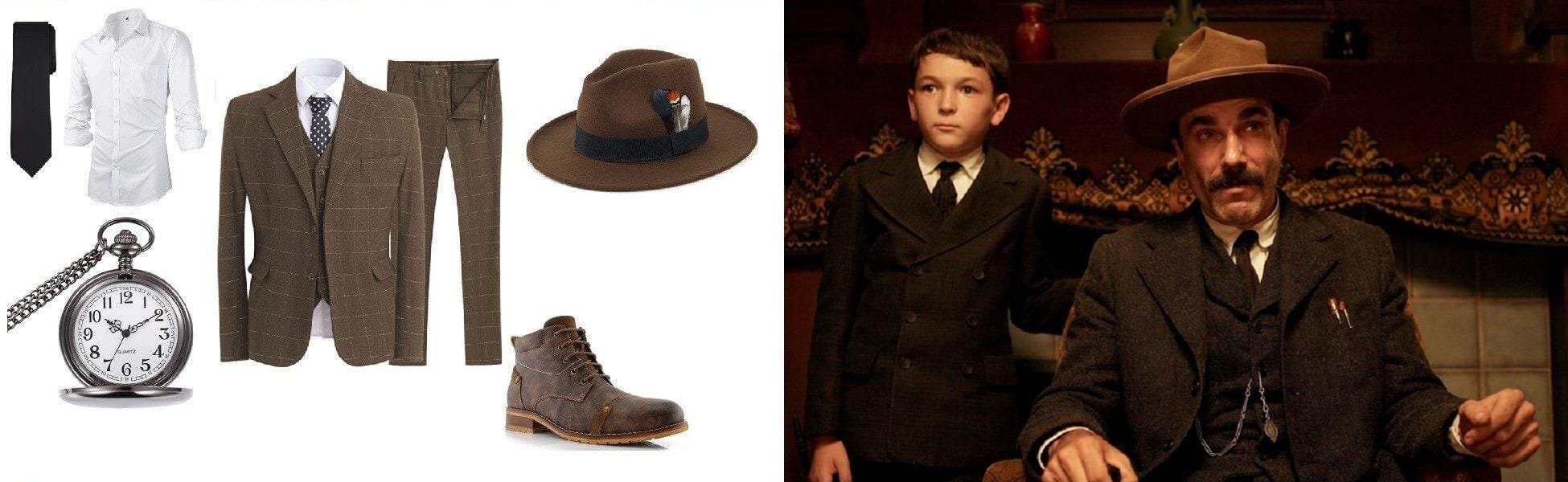
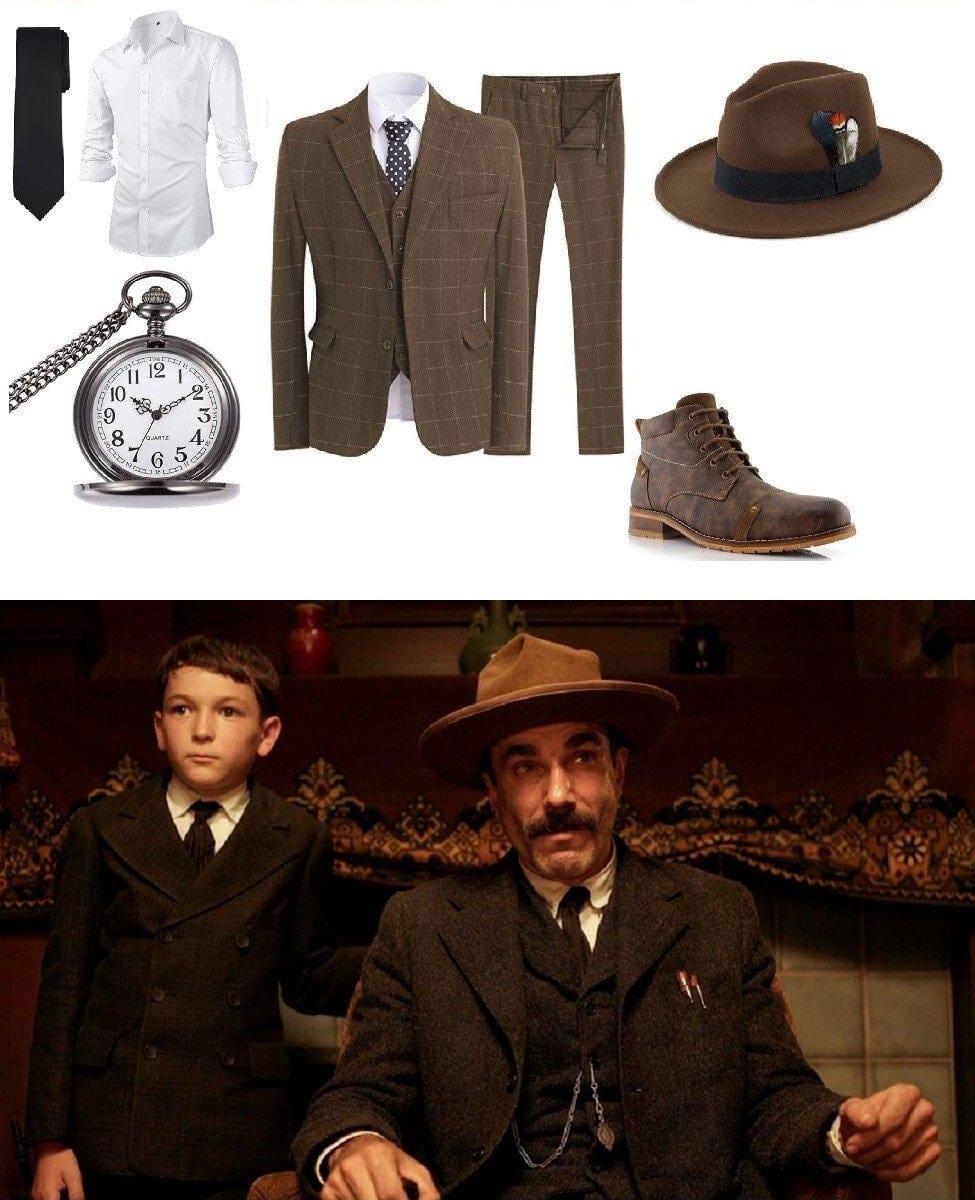
Daniel Plainview dresses like a man whose wardrobe bridges backbreaking field labor and cutthroat Edwardian capitalism. His look centers on a rugged, earth-toned three-piece suit worn with heavy workwear foundations rather than pristine tailoring. The silhouette is heavy and functional, built from thick textiles that suggest dust, sweat, and mineral grease even when he addresses a town hall.
Because modern suits cut a much slimmer, lighter profile than early 1900s work attire, the challenge here lies in fabric weight and fit. Getting the layers right means prioritizing structured woolens or tweed textures over slick modern poly-blends, paired with the weathered hat and grooming that immediately identify the character.
The Three-Piece Wool Suit
Plainview spends most of the film in a dark brown or charcoal three-piece suit cut from coarse, heavy cloth. The jacket features broad notch lapels and a boxier, unvented cut typical of the late Victorian and Edwardian eras. Modern slim-fit suits create the wrong proportions entirely, so opt for a classic or relaxed fit that gives the jacket enough drape to hang naturally over the vest.
The vest does heavy lifting in this outfit because Plainview frequently wears his coat unbuttoned or sheds it entirely during work scenes. It buttons high on the chest with five or six buttons, sitting snug against the ribcage without exposing any shirt fabric between the waistband and the trousers. The trousers themselves should sit at your natural waist rather than the hips, maintaining a straight, full leg that drapes over sturdy leather footwear.
Shirt, Neckwear, and the Pocket Watch
Underneath the waistcoat, a plain white or off-white button-down shirt forms the clean backdrop. Period shirts of the era often used banded or rounded club collars, but a standard point collar tucked tightly beneath the vest lapels functions well enough for conventions. Roll the sleeves up if you plan to wear the outfit in a stripped-down field configuration, or leave them buttoned at the wrist under the coat.
A simple black tie fastens with a tight, compact four-in-hand knot, keeping the tie ends tucked squarely behind the vest front. Across the midsection of the vest, a pocket watch chain fastens through a buttonhole, dropping into one of the lower welt pockets. A classic brass or aged bronze chain provides the right contrast against dark brown wool without flashing excessive shine.
The Slouch Hat and Boots
Plainview’s hat is one of his defining pieces. It is a wide-brimmed brown felt slouch hat featuring an irregular teardrop or center crease, shaped by sun and hard wear rather than a crisp factory press. A standard fedora brim tends to be too narrow, so aim for a felt hat with enough brim width to cast shadows across your eyes. You can soften and reshape stiff wool felt over a kettle of boiling water to give the crown that slightly battered, individualized taper.
Down at the bottom, heavy dark leather boots complete the working silhouette. Ankle-high lace-up work boots or cap-toe field boots fit the period best. If the leather looks brand new out of the box, buffing a little dark paste wax and fine dust into the creases will remove the retail sheen.
Facial Hair, Hair, and Weathering
The mustache carries immediate recognition. Plainview wears a thick, dark walrus-style mustache that extends slightly past the corners of his mouth, kept full rather than finely manicured. If you cannot grow one naturally, a quality lace-backed synthetic mustache trimmed to the right density and adhered with spirit gum holds securely through a full day of wear.
Hair should be combed back or parted to the side with an oil-based or medium-shine pomade, giving it a neat but hard-working finish. Depending on whether you want Plainview fresh from an oil strike or presenting himself to prospective landowners, you can either keep the suit neat or lightly distress the shoulders and hat brim with dry pigment powder to simulate California trail dust.